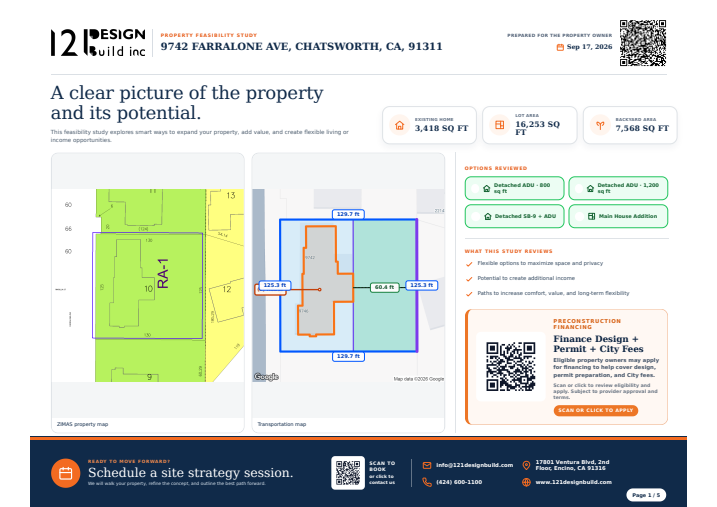
Zone 0 Is Coming to LA Fire Zones: Hardscape and Landscape Cost Drivers for an Encino Hillside ADU Before You Hire

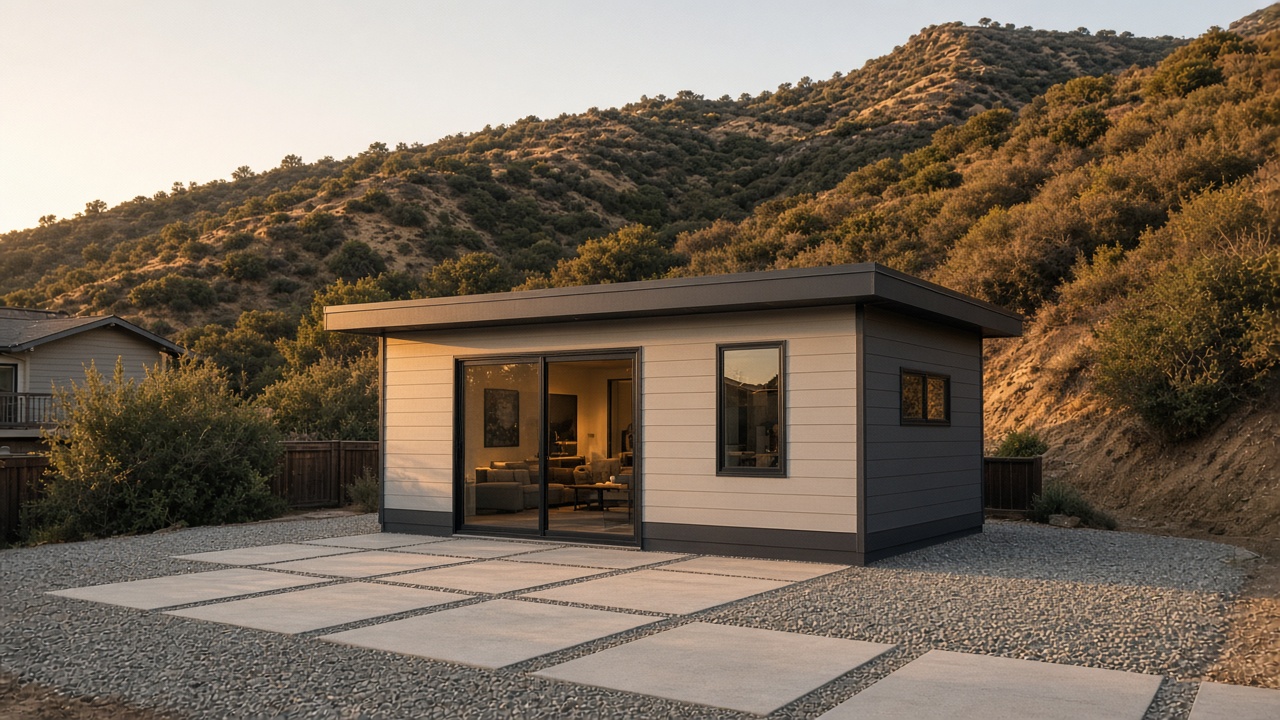
Zone 0 Is Coming to LA Fire Zones: Hardscape and Landscape Cost Drivers for an Encino Hillside ADU Before You Hire
Published October 19, 2026 by Mehdi Ghasemi, Owner, 121 Design Build.
Quick answer
Zone 0 Los Angeles rules are not in effect yet. The California Board of Forestry adopted a statewide Zone 0 regulation on August 19, 2026, but it has no effective date. Its emergency filing with the Office of Administrative Law (OAL) was withdrawn on September 8, 2026, and the Board says it is still working with OAL on a final review. In Los Angeles, Council File 25-1428-S1 asks City staff to report within 60 days on what the City must decide before it writes its own Zone 0 rules. The Planning and Land Use Management (PLUM) Committee approved that motion as amended, 5-0, on October 13, 2026, and it is pending in the Public Safety Committee. If you are planning a hillside ADU in Encino, you do not need to comply with anything new today. But the first five feet around a new building is cheapest to get right on paper, before anything is poured, planted or fenced.
Short definitions
- Zone 0: the ember-resistant zone in the first 5 feet around a structure, required by Public Resources Code Section 4291 as changed by AB 3074 (2020) and SB 504 (2024).
- Zone 1 and Zone 2: the defensible space zones from 5 to 30 feet and from 30 to 100 feet around a structure, or to the property line if that is closer.
- Very High Fire Hazard Severity Zone (VHFHSZ): the highest hazard class on the CAL FIRE / Office of the State Fire Marshal maps. In cities, Zone 0 is aimed at structures in these zones.
- CWUIC: the 2025 California Wildland-Urban Interface Code, Title 24, Part 7. It replaced California Building Code Chapter 7A as the wildfire construction code for permits filed on or after January 1, 2026.
- Hardscape: paving, gravel, pavers, concrete, steps, walls and other non-planted surfaces.
Key Takeaways
- Zone 0 is not in effect statewide or in the City of Los Angeles. No statewide compliance deadline is running.
- The Board of Forestry adopted the rule on August 19, 2026. The emergency filing was withdrawn on September 8, 2026, and the final OAL review is not complete.
- LA Council File 25-1428-S1 (Park, seconded by Nazarian, introduced September 16, 2026) asks for reports within 60 days on the City's deadline and options, how Zone 0 fits with brush clearance and building codes, compliance costs by property type, historic exemptions, and outreach and enforcement.
- Under the adopted draft as summarized by the Board, new construction would comply on the effective date. A new ADU in a covered zone is new construction.
- Check your own lot in ZIMAS and on the CAL FIRE Fire Hazard Severity Zone maps. Do not assume a hillside address is, or is not, in a Very High zone.
- No one can give you a reliable Zone 0 price today. The cost drivers are slope, eave depth, fences, decks, vents, gutters, drainage and how many trades touch the same 5 feet.
Is Zone 0 in effect in Los Angeles right now?
No. The Board of Forestry and Fire Protection adopted the statewide Zone 0 regulation on August 19, 2026. According to Zone Zero Report, which tracks the OAL record, the Board filed it as an emergency regulation on August 28, 2026 and that filing was withdrawn on September 8, 2026, before OAL approved or rejected anything. The Board's own page says staff "continue to work with the Office of Administrative Law on a final review" and will update the page when the review is done and the Secretary of State publishes the final regulation.
That means the rule has no effective date. Every phase-in deadline in the draft is counted from an effective date that does not exist yet. Executive Order N-18-25 had asked the Board to finish by December 31, 2025. That date passed.
The City of Los Angeles has not adopted its own Zone 0 ordinance either. What it has is a motion asking for reports.
What does LA Council File 25-1428-S1 actually ask for?
Councilmember Traci Park introduced the motion on September 16, 2026, seconded by Councilmember Adrin Nazarian. It was referred to both the PLUM Committee and the Public Safety Committee. PLUM approved it as amended, 5-0, on October 13, 2026. The council file shows it is still pending in committee, with Public Safety next.
As summarized by CityHallPass from the motion, it asks the Chief Legislative Analyst and the City Administrative Officer to report within 60 days on:
- The decisions the City faces, and its deadline, before drafting its own Zone 0 ordinance.
- How existing brush clearance, landscaping and building codes would layer with Zone 0.
- The cost of compliance for single-family, multifamily and commercial owners, and the resources available to them.
- The cost for City-owned property.
- An exemption policy for historic structures and gardens that have fire suppression.
- The cost of outreach and enforcement.
The PLUM amendment text had not been posted as of October 16, 2026, so the final scope may differ. These are reports, not rules, and the City has not published cost figures.
What would the state rule require within 5 feet of a new ADU?
The certified final text is not published yet, so treat this as the adopted draft, not settled law. Based on the Board's August 2026 summary, as reported by Zone Zero Report:
- New construction would comply on the effective date. Existing structures get a phased schedule, with the longest items capped at 5 years from the effective date.
- A non-combustible "safety zone" next to the building whose width follows the eave. The Board's example: 12-inch eaves mean a 12-inch safety zone, and 36-inch eaves mean a 36-inch zone. Beyond that, out to 5 feet, is a low-combustibility zone.
- Vegetation-free buffers near the structure, with larger buffers near windows, glass doors, vents, and attached decks, stairs and pergolas.
- Fences: a 5-foot non-combustible section where a fence attaches to the home, and no new combustible fences or gates within Zone 0. Repairs to existing fences are allowed.
- Sheds inside Zone 0 need non-combustible roofs and walls, and mulch and firewood come out of the zone.
The summary also lets local fire agencies in city areas approve alternative practices if they are equally effective and the city council approves them. So the answer to "what does Zone 0 require on my lot" may still depend on what Los Angeles decides.
How does Zone 0 fit with LA brush clearance and the building code?
This is the exact layering question the City asked its staff to study. Two existing rule sets already reach a hillside ADU.
LAFD brush clearance. Owners in the Very High Fire Hazard Severity Zone must keep vegetation in compliance year-round within 200 feet of structures and 10 feet of combustible fences and driveways, keep roofs clear of leaves and needles, and keep trees trimmed away from chimneys. LAFD guidance also allows chipped vegetation to be spread back on the property at limited depth within 30 feet of structures. The draft state Zone 0 rule removes mulch from the first 5 feet. How the City reconciles details like that is still open.
Building code (formerly Chapter 7A). A common fact correction: Chapter 7A of the California Building Code is the old name. California adopted the 2025 California Wildland-Urban Interface Code, Title 24, Part 7, which replaced Chapter 7A. Its construction rules sit in Chapter 5, including Section 504.2 roofing, 504.3 eaves, 504.4 gutters, 504.5 exterior walls, 504.7 projections and decks, 504.8 glazing, 504.10 vents and 504.11 accessory buildings. The State Fire Marshal says it applies to new buildings in State Responsibility Area fire hazard zones and in city-designated Very High and High zones, and local jurisdictions can amend it. Published summaries of Chapter 5 require non-combustible gutters and downspouts with an approved way to keep debris out, and vents that are State Fire Marshal listed, or tested to ASTM E2886, to resist embers and flame. Confirm the version that applies to your permit date with LADBS.
The practical point: the building code covers the ADU itself; Zone 0 adds rules for the ground, plants and fences beside it. Designing both together avoids paying twice.
How do I check whether my Encino lot is in a Very High Fire Hazard Severity Zone?
Do it parcel by parcel. This article does not claim that any specific Encino address is, or is not, in a Very High zone.
- Look up your parcel in ZIMAS, the City of Los Angeles zoning and parcel map, and review its fire hazard information.
- Check the CAL FIRE / Office of the State Fire Marshal Fire Hazard Severity Zone maps and viewer. CAL FIRE notes that for Local Responsibility Areas, you should contact your local jurisdiction for information on a specific area.
- If the two sources do not match, or your lot sits near a boundary, ask LADBS and LAFD before you finalize a site plan.
What drives Zone 0 hardscape and landscape costs on a hillside ADU?
We will not quote dollar figures. The City's cost report is not out, the state text is not certified, and every hillside lot differs. What moves the number:
- Slope and access. On a hillside, a "5-foot gravel strip" can mean retaining walls, steps, cut and fill, and hand-carried materials. Grading and geotechnical findings often matter more than the surface material.
- Drainage. Replacing planting with hardscape changes how water moves. Drains, slopes away from the foundation and outlets need design, not just a contractor's eye.
- Eave depth. Under the draft, the non-combustible safety zone tracks the eave. Deeper eaves give more shade but widen the non-combustible strip. That is a design choice you make once.
- Fences and gates. A wood fence that ties into the ADU or the main house could need a non-combustible section where it attaches. Placement on the site plan can avoid or shorten that.
- Decks, stairs and pergolas. Attached wood elements near the unit trigger larger buffers under the draft and their own CWUIC rules.
- Vents and gutters. Listed ember-resistant vents and non-combustible gutters with debris protection are building-code items, but where they sit relative to plants and paving is a site-planning item.
- Trees and protected species. LAFD notes that brush clearance must comply with the City's protected tree rules. Tree work can affect both schedule and permits.
- Irrigation and utilities. Relocating sprinkler lines and equipment pads is cheaper before trenching.
- Sequencing. The most avoidable cost is doing the 5 feet twice: once by a landscaper after the build, and again when a rule takes effect.
Who should coordinate the first 5 feet: a design-build team or a separate landscaper and contractor?
Both models can work. The question is who owns the seam between the building and the ground.
Separate landscaper and general contractor. This can work well if you already have a landscape designer you trust and a clear site plan. The risk is that the contractor finishes the building, the landscaper arrives later, and nobody was responsible for eave depth, vent locations, fence attachment points, drainage and planting all lining up in the same 5 feet.
Design-build. One team holds the site plan, the building drawings and the construction schedule. That makes it easier to decide early: hardscape width against eave depth, where the fence lands, where vents and downspouts sit, and which trades pour and plant in what order.
Whichever you choose, ask every bidder these questions:
- Have you checked my parcel in ZIMAS and the CAL FIRE maps, and what did you find?
- Who on your team is responsible for the first 5 feet around the ADU, both in drawings and on site?
- How will the design adapt if the state rule or a City ordinance takes effect during construction?
- Which vents, gutters, decking and fence materials are you specifying, and how will drainage work where planting becomes hardscape?
What should Encino ADU owners do now, before any rule takes effect?
- Ask your designer to draw a 5-foot line around the proposed ADU and any structure it attaches to, and show what sits inside it.
- Choose eave depth, fence alignment, deck design and vent locations with that line in view.
- Watch Council File 25-1428-S1 for the Public Safety Committee hearing and the staff reports.
- Do not sign anything that promises "Zone 0 compliance" as if the rule were final. Ask how the contract handles changes.
How 121 Design Build helps
121 Design Build is an Encino-based design-build firm. For hillside ADUs, we plan the building and the ground around it together: the site plan, eaves, vents, gutters, decks, fences, drainage and hardscape, so the first 5 feet does not get designed by accident. We track the state and City rules as they develop and tell you plainly what is required now and what is only proposed.
If you are planning an ADU in Encino or elsewhere in Los Angeles, start with our ADU and JADU service, read our guide to Los Angeles ADU law changes in 2026, or contact us. Call (424) 600-2100 to talk through your site before you commit to a plan set.
FAQ
Is Zone 0 law in Los Angeles right now?
No. The state regulation was adopted by the Board of Forestry on August 19, 2026, but it has no effective date and the final OAL review is not complete. The City of Los Angeles has a pending motion asking for reports, not an ordinance.
When will Zone 0 take effect?
No one can say yet. The state rule takes effect only after OAL completes its review and the Secretary of State publishes it. The City could set its own rules later. Any specific date you hear is a guess.
Does Zone 0 apply to a new ADU?
If your lot is in a covered zone, very likely yes once the rule is effective. The Board's summary says new construction would comply on the effective date. Confirm the final text and the City's approach before you build.
How much will Zone 0 cost for my ADU?
There is no reliable published figure. Cost depends on slope, drainage, eave depth, fences, decks, existing trees and how the work is sequenced. The City has asked staff to report on compliance costs by property type, so watch for that report.
Is Chapter 7A still the code for wildfire construction?
No. As of January 1, 2026, the 2025 California Wildland-Urban Interface Code, Title 24, Part 7, replaced Chapter 7A. Its construction rules are in Chapter 5.
Will I have to tear out my wood fence?
Board staff wrote that the draft does not require wholesale replacement of existing wood fences. Repairs are allowed. The non-combustible standards apply where a fence attaches to the home, where a gate attaches, or where a fence within 5 feet is fully replaced or newly built.
Sources
- Los Angeles City Clerk, Council File 25-1428-S1 record
- CityHallPass, LA PLUM Committee meeting, October 13, 2026
- California Board of Forestry and Fire Protection, Defensible Space Zones 0, 1 and 2
- Zone Zero Report, Zone 0 enforcement timeline in California
- CAL FIRE Office of the State Fire Marshal, Building in the Wildland (CWUIC)
- International Code Council, California adopts the 2024 IWUIC as the 2025 CWUIC
- LA County Public Works, 2026 Fire Hazard Notes (CWUIC Chapter 5 summary)
- CAL FIRE Office of the State Fire Marshal, Fire Hazard Severity Zones maps
- City of Los Angeles, ZIMAS parcel lookup
- Los Angeles Fire Department, Brush Clearance Requirements
This article is general information, not legal advice. Zone 0 rules are still being finalized and depend on your specific property. Confirm current requirements with the City of Los Angeles, LAFD, LADBS and qualified professionals before making decisions.
#Zone0 #Zone0LosAngeles #EncinoADU #LosAngelesADU #HillsideADU #WildfireReady #DefensibleSpace #SanFernandoValley #121DesignBuild
Browse Our Related Articles & Blogs
Dive into a wide range of blog posts featuring the latest projects, creative design ideas and innovative sustainable practices. Stay informed with expert industry updates that shape the future of construction.

Frequently Asked Questions
Can’t find the answer you’re looking for? Please contact with our customer service.
Can’t find the answer you’re looking for? Please contact with our customer service.
Ready to build Smarter?
Book your free consultation today and discover how quickly we can turn your ideas into permits and long-term property value. Our team is here to guide you from the first sketch to final approval.