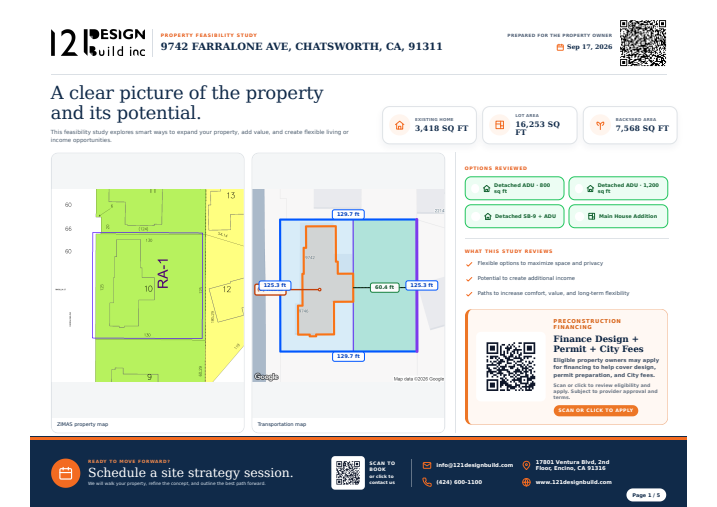
Los Angeles SB 79 Housing: Transit Upzoning Guide


Quick answer: Los Angeles SB 79 housing is about a new California transit-oriented development law that takes effect July 1, 2026 and requires cities in certain urban counties to allow qualifying multifamily housing near eligible rail, rapid bus, ferry and other major transit stops. For Los Angeles property owners and developers, the practical issue is not simply whether a site is near transit, but whether it falls within a mapped Tier 1 or Tier 2 transit-oriented development zone, whether local phased implementation applies, and whether the project can meet affordability, site, design, safety and approval requirements.
Senate Bill 79, the Abundant and Affordable Homes Near Transit Act, is a 2025 California law codified at Government Code Sections 65912.155 through 65912.162 that creates state zoning standards for qualifying housing near specified transit stops.
What does Los Angeles SB 79 housing change near transit?
Los Angeles SB 79 housing changes the baseline development conversation by making certain qualifying housing projects an allowed use on sites zoned residential, mixed use or commercial within a transit-oriented development zone. Before SB 79, many transit-adjacent parcels could still be constrained by local height limits, low-density zoning, single-family zoning patterns or discretionary local standards that made multifamily housing infeasible. SB 79 does not erase every permitting step, but it limits the ability of local zoning to block qualifying projects that meet the statute’s standards.
The law was approved by Governor Gavin Newsom and filed with the Secretary of State on October 10, 2025. The California Department of Housing and Community Development states that SB 79 takes effect on July 1, 2026 and that HCD oversees compliance, including review of local SB 79 ordinances and transit-oriented development alternative plans.
For the Los Angeles market, the immediate consequence is that transit-oriented development Los Angeles sites need to be evaluated differently. A parcel that previously looked like a small-lot residential, commercial corridor or low-rise infill site may have a new feasibility profile if it is within the statutory distance of an eligible stop and is not excluded by local implementation rules, safety standards, anti-displacement protections or other site constraints.
Which Los Angeles SB 79 housing sites may qualify?
Qualifying sites are generally those zoned for residential, mixed-use or commercial development and located within the required distance of a qualifying transit-oriented development stop in an urban transit county. SB 79 defines a transit-oriented development zone as the area within one-half mile of a transit-oriented development stop. It defines an urban transit county as a county with more than 15 passenger rail stations, which brings Los Angeles County within the law’s scope.
The statute creates Tier 1 and Tier 2 stops. Tier 1 includes stops served by heavy rail transit or very high frequency commuter rail. In Los Angeles, LAist reported that Metro B and D Line subway stations are the local examples of heavy rail Tier 1 stops. Tier 2 generally includes eligible light rail, high-frequency commuter rail and qualifying bus service. LAist reported that Tier 2 areas in Southern California include Metro light rail and dedicated bus lane stops, with some Metrolink commuter rail stations also qualifying.
Distance matters. SB 79 measures distance in a straight line from the nearest edge of the project parcel to a pedestrian access point for the transit stop. This means a site’s legal eligibility may differ from a simple driving or walking estimate. It also makes mapping, survey, parcel research and early zoning due diligence especially important before design work begins.
How tall can SB 79 housing projects be in Los Angeles?
SB 79 establishes minimum local standards for height, density and residential floor area ratio based on transit tier and proximity. For Tier 1 stops, qualifying projects within one-quarter mile are protected against local height limits below 75 feet, maximum density standards below 120 dwelling units per acre and standards that would physically preclude a residential FAR of up to 3.5. For Tier 1 projects farther than one-quarter mile but within one-half mile in cities of at least 35,000 people, the protected standards step down to 65 feet, 100 dwelling units per acre and residential FAR up to 3.0.
For Tier 2 stops, qualifying projects within one-quarter mile are protected against local height limits below 65 feet, maximum density below 100 dwelling units per acre and standards that would preclude residential FAR up to 3.0. For Tier 2 projects farther than one-quarter mile but within one-half mile in cities of at least 35,000 people, the protected standards step down to 55 feet, 80 dwelling units per acre and residential FAR up to 2.5.
In practical design terms, this is why many news accounts describe the law as allowing mid-rise and, in some cases, taller apartment buildings near transit. But a project’s actual buildable envelope still depends on site dimensions, fire access, code compliance, objective standards, affordability rules, construction type, financing and whether local implementation standards have been accepted by HCD.
What is the current Los Angeles SB 79 housing status?
SB 79 is enacted state law and is scheduled to become operative for local agencies on July 1, 2026, unless a local agency adopts an ordinance or local transit-oriented development alternative plan deemed compliant before that date. HCD says local jurisdictions are required to process qualifying SB 79 housing projects once the law becomes effective, but they are not required to adopt their own SB 79 ordinance or alternative plan.
Los Angeles City Planning states that on March 24, 2026, the City Council directed City Planning to pursue a phased implementation approach to implement SB 79 locally by 2030 and to expand the Corridor Transition Program to certain single-family and lower residential parcels within half-mile buffers around eligible transit stations, while excluding HPOZs. City Planning released draft Low-Rise and Phased Implementation ordinances on April 17, 2026, and the City Planning Commission voted on May 14, 2026 to recommend approval of both ordinances.
That local process matters because Los Angeles is not simply waiting for state law to switch on. The city is trying to shape how SB 79 applies locally, including through low-rise allowances and phased implementation. For owners, the near-term question is whether a site will be governed by the state default standards, a local ordinance, an HCD-reviewed alternative plan, or a temporary or permanent exclusion.
What does SB 79 mean for homeowners, investors and developers?
For homeowners, investors and developers, SB 79 can create new development potential near transit, but it does not automatically make every parcel profitable or permit-ready. The law may open a path to multifamily housing on eligible parcels, including some areas previously limited to low-density development, but projects still have to satisfy affordability requirements, building code, fire standards, objective design standards, labor standards in certain cases and review under the applicable approval pathway.
SB 79 requires qualifying transit-oriented housing developments to include at least five dwelling units and meet the greater of 30 dwelling units per acre or the local minimum density, if applicable. The law also limits average unit floor area to 1,750 net habitable square feet. For projects with more than 10 units, SB 79 includes lower-income housing requirements unless a stricter local inclusionary requirement applies.
From a property strategy standpoint, the smartest first step is a feasibility screen, not a full design package. Owners should verify the stop tier, parcel distance, zoning category, overlays, historic status, fire or coastal constraints, rent-stabilized housing history, demolition limits, utility capacity, parking strategy and likely entitlement path. A site that looks promising on a map may still need substantial architectural, code and financial analysis before moving forward.
How can 121 Design Build help with SB 79 and LA housing development?
121 Design Build helps Los Angeles owners translate zoning opportunity into permit-ready design strategy. For larger ground-up projects, our New Construction team can evaluate site planning, massing, code strategy and construction feasibility under one roof. For mission-driven or income-restricted projects, our Affordable Housing / ED-1 experience is especially relevant because SB 79 intersects with affordability requirements and other state housing incentives.
Some owners may discover that an SB 79 project is not the best immediate fit, but that an ADU & JADU, SB9 strategy, or targeted Addition & Remodel can unlock value sooner. Commercial corridor owners should also consider whether adaptive reuse, mixed-use redevelopment or tenant-space repositioning requires Commercial Architecture support before a larger housing play becomes feasible.
If you own or control a property near a Metro rail, bus rapid transit or other eligible transit stop, start with a feasibility conversation before the market gets crowded. Contact 121 Design Build at https://www.121designbuild.com/contact or call (424) 600-2100 to discuss a permit-ready design path for your Los Angeles site.
Key Takeaways
- SB 79 was signed on October 10, 2025 and is scheduled to take effect for local agencies on July 1, 2026.
- The law is codified at California Government Code Sections 65912.155 through 65912.162.
- Eligible projects generally must be on residential, mixed-use or commercial sites near qualifying Tier 1 or Tier 2 transit stops.
- SB 79 sets minimum standards for height, density and residential FAR, but local ordinances and HCD-reviewed alternative plans can affect implementation.
- Los Angeles is pursuing phased local implementation, so parcel-specific due diligence is essential before design or acquisition decisions.
Frequently Asked Questions
When does SB 79 take effect in Los Angeles?
SB 79 takes effect for local agencies on July 1, 2026, unless a jurisdiction has adopted a compliant ordinance or transit-oriented development alternative plan before that date. Los Angeles has been pursuing a phased local implementation approach, so individual site outcomes may depend on final local rules and HCD review.
Does SB 79 apply to single-family neighborhoods in Los Angeles?
SB 79 can affect some single-family or low-density areas if they are within a qualifying transit-oriented development zone and meet the statute’s site criteria. However, exclusions, phased implementation, historic protections, fire-risk areas, low-resource area rules and local ordinances may change how the law applies to a specific parcel.
Does SB 79 guarantee project approval?
No. SB 79 creates state zoning standards and can make qualifying housing an allowed use, but projects still must meet applicable objective standards, affordability requirements, building and fire codes, anti-displacement rules and the relevant approval process. Early feasibility review is still necessary.
Can SB 79 be combined with density bonus law?
Yes, SB 79 provides that qualifying projects may be eligible for density bonus, incentives, concessions, waivers or parking ratios under state Density Bonus Law or a local density bonus program, using the SB 79 density as the base. Whether that strategy works depends on affordability levels, site constraints and project economics.
What should a Los Angeles property owner do first?
Start by confirming whether the parcel is within a mapped Tier 1 or Tier 2 transit-oriented development zone and whether any local exemptions or phased implementation rules apply. Then evaluate zoning, overlays, code constraints, project size, affordability obligations, financing and permit strategy before committing to acquisition or design.
Sources
- California Legislative Information: SB 79 bill text
- California HCD: SB 79 Transit-Oriented Development
- Los Angeles City Planning: Senate Bill 79 resources
- Los Angeles Times: New California law aims to trigger condo construction boom for transit commuters
This article is general information from a design-build and permitting perspective and is not legal advice.
#SB79 #LosAngelesHousing #LADevelopment #TransitOrientedDevelopment #Upzoning #MultifamilyHousing #AffordableHousing #LAPermits #DesignBuild #ArchitectureLA #HousingPolicy #RealEstateDevelopment
Browse Our Related Articles & Blogs
Dive into a wide range of blog posts featuring the latest projects, creative design ideas and innovative sustainable practices. Stay informed with expert industry updates that shape the future of construction.


Frequently Asked Questions
Can’t find the answer you’re looking for? Please contact with our customer service.
Can’t find the answer you’re looking for? Please contact with our customer service.
Ready to build Smarter?
Book your free consultation today and discover how quickly we can turn your ideas into permits and long-term property value. Our team is here to guide you from the first sketch to final approval.