Los Angeles SB 9 Eligibility: 2026 Checklist Update

Quick answer: Los Angeles SB 9 eligibility now depends on passing a property-specific screening through the City’s ZIMAS SB 9 Eligibility Criteria Checklist before an owner can rely on SB 9 for a two-unit development or urban lot split. The August 6, 2026 Google News item points to a City of Los Angeles checklist, not a new state bill; the confirmed law remains Senate Bill 9, effective January 1, 2022, while Los Angeles continues to implement it through LADBS, City Planning, ZIMAS, and updated application materials. For homeowners and small developers, the practical takeaway is simple: confirm zoning, tenant protections, historic status, habitat, coastal, hillside, RSO, and map requirements before investing in plans.
SB 9 is California’s Housing Opportunity and More Efficiency Act, a state law that created ministerial approval pathways for certain two-unit developments and urban lot splits on single-family-zoned parcels.
What is the Los Angeles SB 9 eligibility checklist?
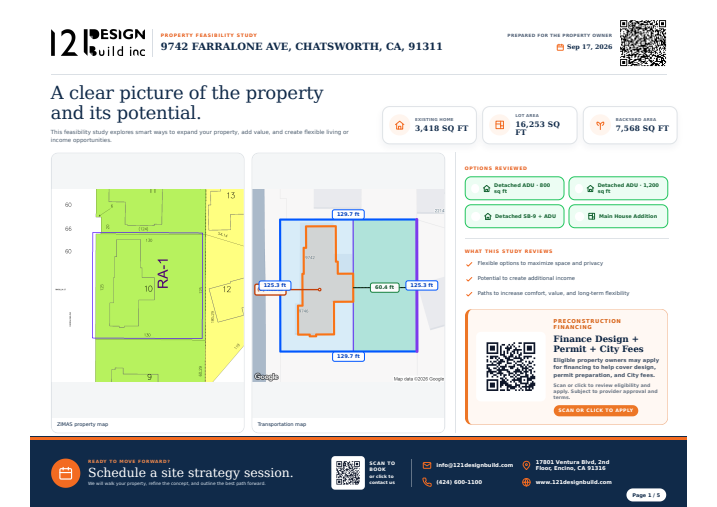
The Los Angeles SB 9 eligibility checklist is the City’s parcel-level screening tool used to identify whether a site appears eligible, ineligible, or in need of further review for SB 9 processing. The checklist is accessed through ZIMAS, the City’s zoning and parcel information system, under the Planning and Zoning tab for a specific property.
Los Angeles City Planning’s current SB 9 Urban Lot Split specialized requirements, form CP-3605 dated July 6, 2026, specifically instruct applicants to provide a completed printout of the SB 9 Eligibility Criteria table from ZIMAS. That makes the ZIMAS SB 9 checklist more than a research convenience; for an urban lot split, it functions as part of the early application record.
The checklist does not replace professional due diligence. A parcel may show a promising result in ZIMAS but still require documentation, agency sign-offs, biological review, coastal processing, grading review, a protected tree report, or Housing Department review before a complete filing can move forward.
Did the Los Angeles SB 9 eligibility rules change in 2026?
No new state SB 9 law change was confirmed from the August 6, 2026 news item; the verified change is procedural and administrative, reflected in City checklist use and updated filing materials. SB 9 itself was approved by Governor Gavin Newsom on September 16, 2021, and took effect January 1, 2022, adding Government Code Sections 65852.21 and 66411.7 and amending Section 66452.6.
Compared with the pre-SB 9 world, the major legal change is that qualifying two-unit developments and qualifying urban lot splits must be reviewed ministerially, without discretionary review or a public hearing, if they satisfy state and local objective criteria. Compared with earlier City practice, the current 2026 takeaway is that applicants should expect ZIMAS eligibility output, updated City Planning forms, and interdepartmental clearances to shape the first pass of the application.
The City’s LADBS SB 9 page states that an SB 9 Eligibility Checklist can be found by searching a project address in ZIMAS, expanding Planning and Zoning, and clicking “view” next to SB 9 Eligibility. It also explains that two-unit developments are submitted to LADBS for plan check and permitting, while urban lot splits are filed with City Planning for review and processing.
Who does Los Angeles SB 9 eligibility affect?
Los Angeles SB 9 eligibility affects owners, investors, and developers working with single-family-zoned property inside the City of Los Angeles. It is most relevant to property owners exploring a duplex, a second primary dwelling unit, a parcel split, or a combined strategy that divides one single-family lot into two parcels and places residential units on one or both resulting lots.
SB 9 is not available for every residential parcel. Los Angeles City Planning’s SB 9 materials state that the law applies to lots zoned for single-family residential uses, and the City FAQ makes clear that parcels zoned for two or more units cannot use SB 9, even if they may have other options such as ADUs, small lot subdivision, or other multifamily pathways.
Several owners should be especially careful before assuming eligibility: owners of older properties with tenant history, RSO exposure, hillside lots, coastal lots, parcels with protected trees, lots in or near habitat areas, sites in historic districts, and parcels subject to overlays, Q conditions, D limitations, or specific plan standards. These conditions do not always end the conversation, but they can change the path, cost, timing, and documentation required.
What makes a Los Angeles property eligible for SB 9?
A Los Angeles property is generally eligible for SB 9 only if it is a qualifying single-family-zoned parcel and does not trigger one of the state or local disqualifying conditions. Government Code Section 65852.21 governs two-unit developments, while Government Code Section 66411.7 governs urban lot splits.
For two-unit developments, SB 9 allows a qualifying housing development with no more than two residential units in a single-family residential zone to be considered ministerially. For urban lot splits, the law allows a qualifying existing single-family-zoned parcel to be subdivided into no more than two parcels, subject to size, ownership, adjacency, access, and residential-use rules.
Important exclusions include demolition or alteration of protected housing, housing subject to rent or price controls, housing occupied by a tenant in the last three years, properties affected by an Ellis Act withdrawal within the statutory period, and sites in historic districts or legally designated historic properties. For urban lot splits, the new parcels generally must be approximately equal in area, neither parcel may be smaller than 40 percent of the original lot, and both new lots must generally be at least 1,200 square feet unless a local ordinance allows otherwise.
What does the checklist mean for SB 9 urban lot splits in Los Angeles?
For an SB 9 urban lot split in Los Angeles, the checklist is an early filter that helps determine whether City Planning should even receive a complete filing package. The current CP-3605 specialized requirements require the ZIMAS eligibility table, a preliminary parcel map, record documents, photographs, tree disclosures, and other materials depending on site conditions.
Urban lot split applicants should expect subdivision-level due diligence, not just architectural drawings. The City’s form requires information about lot dimensions, existing structures, zoning, streets, trees and shrubs, hazardous conditions, contours, and the final map note identifying the project as an urban lot split pursuant to SB 9.
Some sites need added review. Hillside, seismic, liquefaction, flood hazard, coastal, horsekeeping, specific plan, overlay, protected tree, and habitat conditions can require additional reports, referrals, or concurrent applications. For example, CP-3605 states that if the ZIMAS checklist indicates “Bio Review Needed,” the applicant should submit a Biologist’s Statement of Habitat; if it states “No,” an Owner’s Declaration of No Habitat may be required.
What does Los Angeles SB 9 eligibility mean for design and permitting?
Los Angeles SB 9 eligibility does not guarantee a buildable or financeable project; it creates a ministerial path only if the design can satisfy objective standards and technical review. LADBS still reviews building plans for code compliance, and City Planning still reviews applicable zoning, subdivision, and clearance requirements.
SB 9 limits how far local standards can go. The City and state materials confirm that objective zoning, subdivision, or design standards cannot be imposed if they would physically preclude the construction of two units or physically preclude either unit from being at least 800 square feet. Side and rear setbacks may generally be limited to four feet, while the front setback follows the underlying zone, and existing structures or same-location replacements may have different setback treatment.
Parking is another design variable. SB 9 allows local agencies to require up to one parking space per unit, but parking cannot be required when the parcel is within one-half mile walking distance of a qualifying high-quality transit corridor or major transit stop, or within one block of a car-share vehicle. In Los Angeles, many otherwise constrained lots may become more feasible when the parking exemption applies.
How should Los Angeles owners use the SB 9 checklist before hiring for plans?
Owners should use the checklist as the first gate in a feasibility study, not as the final decision. A smart process begins with ZIMAS, then confirms zoning, lot legality, permit history, rent stabilization exposure, tenant occupancy, overlays, trees, hillside and grading conditions, fire access, utility strategy, and construction cost before producing permit-ready plans.
For many Los Angeles homeowners, the critical mistake is comparing SB 9 only against ADU rules. SB 9 creates primary dwelling units and, in the case of a lot split, potentially separate parcels; ADUs and JADUs remain accessory housing tools with different ownership, financing, rental, and design implications. A property may support an ADU, an SB 9 two-unit development, an SB 9 urban lot split, or a combination, but the best strategy depends on the lot and the owner’s long-term objective.
From a design-build perspective, the checklist should be read alongside a preliminary site plan. A lot can be technically eligible yet impractical if access, grading, fire separation, privacy, stormwater, structural retention, or construction staging make the project inefficient. Early design coordination helps avoid spending months pursuing a path that does not pencil.
Key Takeaways
- Los Angeles SB 9 eligibility is checked through ZIMAS and is now a practical filing requirement for urban lot split applications.
- SB 9 remains an active California law effective January 1, 2022; the August 2026 news item does not appear to be a new state law.
- Government Code Sections 65852.21 and 66411.7 govern two-unit developments and urban lot splits, respectively.
- Single-family zoning is necessary but not sufficient; tenant protections, historic status, habitat, coastal, hillside, trees, and overlays can affect eligibility.
- Permit success depends on pairing checklist results with site planning, code analysis, and realistic construction strategy.
How can 121 Design Build help with Los Angeles SB 9 eligibility?
121 Design Build helps Los Angeles owners turn SB 9 eligibility research into permit-ready design strategy. Our team can evaluate whether a parcel is better suited for an SB9 urban lot split, a two-unit development, an ADU & JADU, an Addition & Remodel, or ground-up New Construction.
The value is in sequencing. Before committing to full architectural plans, owners need a clear read on ZIMAS flags, planning clearances, LADBS plan check risks, protected housing issues, site constraints, and construction feasibility. Because 121 Design Build integrates architecture and construction under one roof, the feasibility conversation can address both entitlement logic and buildability.
If you are considering a Los Angeles single-family lot split, duplex plan, ADU strategy, or redevelopment of an existing parcel, contact 121 Design Build for a practical feasibility review before you invest in drawings.
Frequently Asked Questions
Where do I find the Los Angeles SB 9 eligibility checklist?
You can find the checklist in ZIMAS by searching the property address, opening the Planning and Zoning information, and viewing the SB 9 Eligibility item if available. For an urban lot split, City Planning’s 2026 requirements call for a completed printout of that eligibility table.
Does SB 9 let me split any single-family lot in Los Angeles?
No. The lot must satisfy state and local eligibility criteria, including single-family zoning, minimum parcel rules for urban lot splits, protected housing restrictions, historic restrictions, and other site-specific conditions. ZIMAS is the starting point, but City review and supporting documents determine whether the application can proceed.
Can I use SB 9 on a rent-stabilized property in Los Angeles?
Possibly, but RSO and tenant history can be major constraints. Los Angeles City Planning’s FAQ states that demolishing or altering RSO units can disqualify a project, and LAHD may need to review whether protected units, Ellis Act history, affordability covenants, or tenant occupancy are affected.
Is an SB 9 unit the same as an ADU?
No. SB 9 units are primary dwelling units created under a state housing development or subdivision pathway, while ADUs and JADUs are accessory units regulated under separate laws. Some Los Angeles projects may combine strategies, but the unit count, parcel structure, parking, ownership, and design rules differ.
Do I still need building permits if SB 9 is ministerial?
Yes. Ministerial approval means the qualifying planning or subdivision review is based on objective standards and avoids discretionary hearings, but LADBS building permits, plan check, structural review, fire-life-safety requirements, and applicable clearances still apply.
Authoritative sources used
- California Legislative Information: SB 9 bill text
- LADBS: Senate Bill 9 Two-Unit Development and Urban Lot Split
- Los Angeles City Planning: SB 9 FAQ, revised May 19, 2023
- Los Angeles City Planning: CP-3605 SB 9 Urban Lot Split Specialized Requirements
This article is general information from a design-build and permitting perspective and is not legal advice.
#LosAngelesSB9 #SB9 #ZIMAS #LADBS #LACityPlanning #UrbanLotSplit #TwoUnitDevelopment #ADU #JADU #LosAngelesRealEstate #PermitReady #DesignBuild
Browse Our Related Articles & Blogs
Dive into a wide range of blog posts featuring the latest projects, creative design ideas and innovative sustainable practices. Stay informed with expert industry updates that shape the future of construction.


Frequently Asked Questions
Can’t find the answer you’re looking for? Please contact with our customer service.
Can’t find the answer you’re looking for? Please contact with our customer service.
Ready to build Smarter?
Book your free consultation today and discover how quickly we can turn your ideas into permits and long-term property value. Our team is here to guide you from the first sketch to final approval.