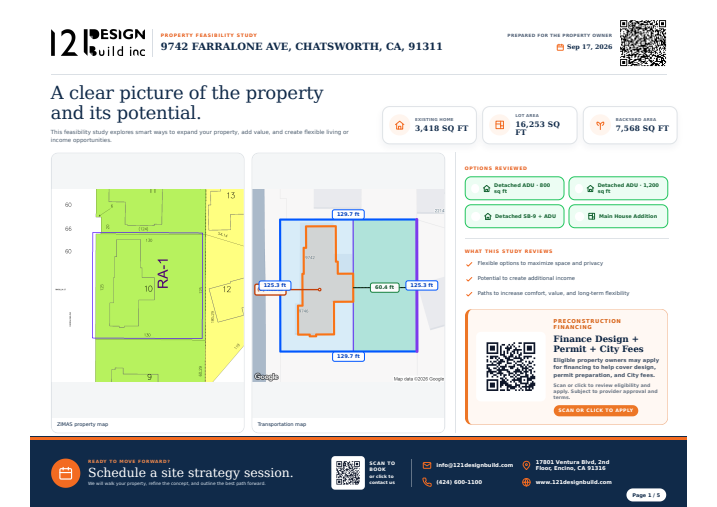
Los Angeles Vacant Lot Housing: What Owners Should Know

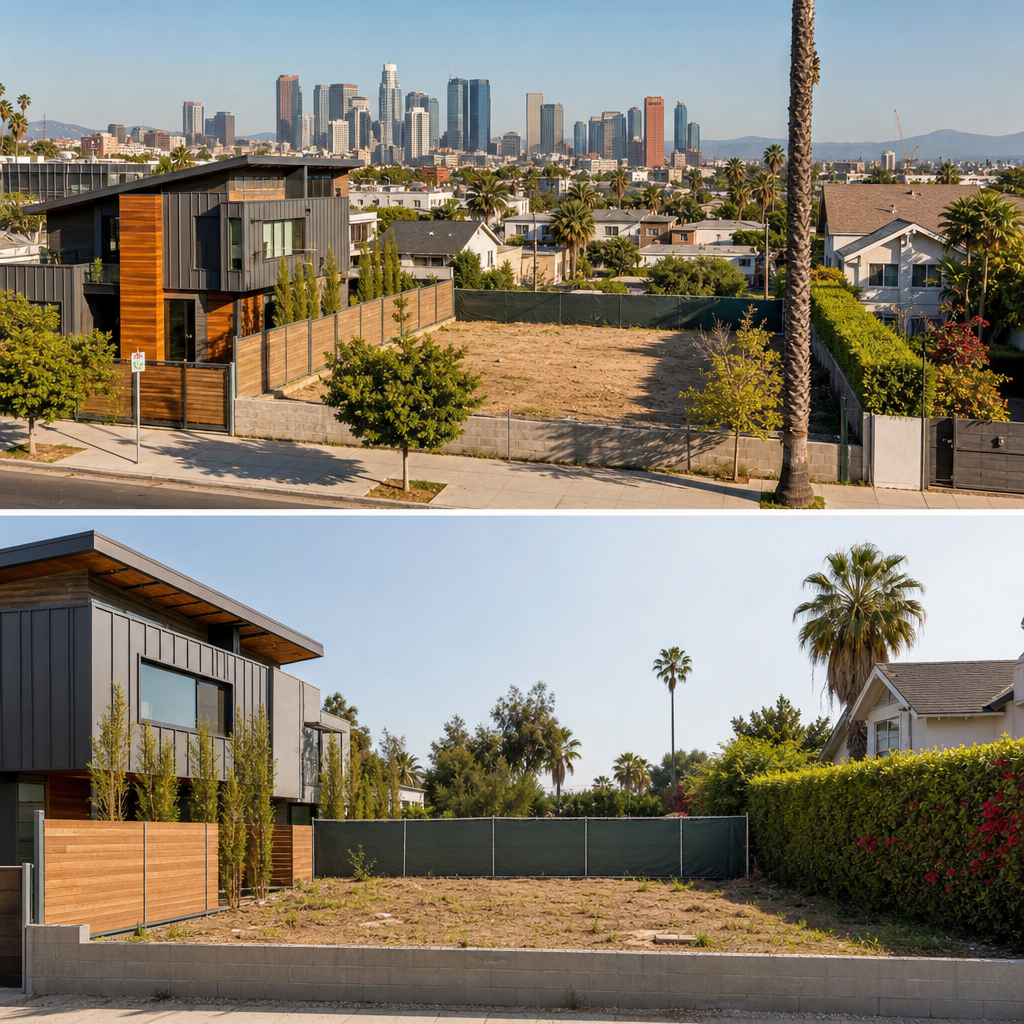
Quick answer: Los Angeles vacant lot housing is getting renewed attention because the city has tens of thousands of small vacant residential parcels, many of which may be able to support starter homes, duplexes, fourplexes, townhomes, bungalow courts, or small condo projects. The recent focus is not a single blanket rezoning; it is a convergence of UCLA cityLAB’s Small Lots, Big Impacts initiative, Los Angeles public-land actions, private-lot financing experiments, and state laws such as SB 1123 that can streamline certain small-lot subdivisions. For owners and developers, the opportunity is real, but every parcel still needs zoning, title, utility, access, environmental, financing, and permitting due diligence before it can become housing.
Small Lots, Big Impacts is a UCLA cityLAB, City of Los Angeles, and LA4LA initiative designed to show how overlooked small lots can become compact, attainable, for-sale housing rather than remain vacant or underused.
What is Los Angeles vacant lot housing and why is it in the news?
Los Angeles vacant lot housing means using small empty or underused parcels inside the existing city fabric for new homes instead of relying only on large apartment sites or outward sprawl. The Los Angeles Times’ August 7, 2026 report highlighted the same question designers, city officials, and housing advocates have been asking: how many of L.A.’s vacant lots could become realistic housing sites?
The answer depends on more than parcel count. A vacant lot may be zoned residential, but still face constraints such as slope, fire hazard, street access, easements, utility capacity, protected trees, contaminated soil, hillside grading, coastal review, or subdivision rules. That is why the strongest small-lot strategy is not simply “find empty land and build.” It is a parcel-by-parcel feasibility process that pairs architecture, code analysis, cost modeling, and entitlement strategy from the beginning.
UCLA cityLAB’s materials have described Small Lots, Big Impacts as a way to build innovative small-scale homeownership projects across Los Angeles and to demonstrate missing-middle housing that can fit into existing neighborhoods. The initiative’s design competition used four prototype site types as stand-ins for hundreds of similar city-owned properties and thousands of privately owned infill sites.
What changed for Los Angeles vacant lot housing in 2026?
The most important 2026 development is that the conversation moved from design concepts toward implementation pathways. UCLA announced on April 29, 2026 that cityLAB and Genesis LA would expand Small Lots, Big Impacts to privately owned lots, with a Request for Information released on May 7, 2026 and applications due June 12, 2026.
That private-land program is distinct from the public-land side of the initiative. UCLA stated that up to three development teams would be selected to acquire private parcels and build missing-middle homeownership projects, supported by favorable financing from Genesis LA’s Homeownership Innovation Fund. The stated goal is to model how small developers can produce duplexes, fourplexes, courtyard housing, townhomes, and other moderate-density ownership formats that are more attainable than detached single-family homes.
On the public-land side, Los Angeles Council File 25-1259 concerns Small Lots, Big Impacts, city-owned land, and a Request for Qualifications. The file was introduced on October 22, 2025, the City Council adopted the item as amended on March 6, 2026, and council action became final on March 10, 2026. That matters because it shows the city is not only discussing vacant lots conceptually; it is also building a formal path to dispose of selected city-owned sites for housing development.
How does SB 1123 affect small vacant lots in Los Angeles?
SB 1123 affects Los Angeles vacant lot housing by expanding California’s small-lot subdivision streamlining rules to certain vacant single-family-zoned lots starting July 1, 2025. The law amended Government Code Sections 65852.28 and 66499.41 and applies statewide, including charter cities such as Los Angeles.
Before SB 1123, the small-lot subdivision framework created by SB 684 primarily focused on qualifying multifamily-zoned sites. SB 1123 revised that framework so that an eligible lot may be either zoned for multifamily residential dwelling use or be vacant and zoned for single-family residential development. For single-family-zoned vacant lots, the law sets additional limits, including a maximum lot size of 1.5 acres and a minimum newly created parcel size of 1,200 square feet, unless a local agency adopts a smaller minimum.
SB 1123 does not make every empty residential lot buildable for 10 homes. The statute includes eligibility requirements and exclusions, including rules related to tenant-occupied housing in the prior five years, rent-restricted or rent-controlled housing, urban location, parcel history, and compliance with objective standards that do not conflict with state law. From a design-build perspective, the key point is that owners should not assume eligibility from zoning alone; they need a written feasibility review before buying, financing, or designing a project.
What kinds of projects could work on L.A. vacant residential lots?
The most realistic projects are often missing-middle formats: duplexes, fourplexes, bungalow courts, small townhome clusters, courtyard apartments, and compact condominium or tenancy-in-common structures. These forms can add households without requiring the scale, financing structure, or political profile of a large apartment building.
Good small-lot design in Los Angeles has to solve several problems at once. Units need daylight, privacy, outdoor space, trash access, utility routing, fire access, stormwater management, and constructible structural systems. Parking may be reduced or constrained in some contexts, but circulation and curb access still affect feasibility and neighborhood acceptance.
The strongest candidates are typically lots with clean title, reasonable slope, clear street frontage, existing utility access, compatible zoning, and a neighborhood context that supports incremental density. Parcels near transit, jobs, schools, and services are especially important because they can turn infill housing into practical daily-life housing rather than isolated units.
What should Los Angeles property owners check before developing a vacant lot?
Owners should begin with a feasibility study that tests zoning, state-law eligibility, site constraints, unit yield, construction cost, permitting path, and exit strategy. A vacant lot can look simple from the sidewalk and still become difficult once survey, soils, utilities, easements, hillside rules, fire access, or environmental conditions are reviewed.
The first step is usually a zoning and parcel analysis: base zone, overlays, community plan, Specific Plan, TOC or transit incentives, SB 1123 or SB 9 eligibility, density bonus potential, and any recorded covenants. The second step is physical due diligence: survey, topography, soils, drainage, utility availability, tree report, and access. The third step is financial modeling: likely unit count, hard costs, soft costs, permit fees, financing assumptions, affordability requirements, and whether the product will be sold, rented, held, or structured as a common-interest development.
In Los Angeles, speed comes from resolving these issues before design gets too detailed. A strong permit-ready package should align architecture, structural engineering, energy compliance, stormwater, civil work, and construction pricing early, not after planning comments expose the gaps.
Key Takeaways
- Los Angeles has more than 20,000 vacant lots discussed in the current housing debate, but not every lot is legally or physically ready for housing.
- UCLA cityLAB’s Small Lots, Big Impacts initiative is moving from design competition to public-land and private-land implementation pathways.
- SB 1123 became operative on July 1, 2025 and expanded streamlined small-lot subdivision rules to certain vacant single-family-zoned lots.
- The best small-lot projects will be won through feasibility, entitlement strategy, financing, and constructible design—not parcel count alone.
- Owners should verify zoning, title, utilities, environmental conditions, and objective standards before committing to acquisition or design.
How can 121 Design Build help with Los Angeles vacant lot housing?
121 Design Build helps owners, investors, and developers translate housing opportunity into permit-ready design and buildable scope. For a vacant residential lot, that means starting with feasibility, then moving into architecture, engineering coordination, entitlement strategy, and construction planning under one roof.
For ground-up small-lot projects, our New Construction team can evaluate massing, unit yield, constructability, and permitting sequence. If the project includes deed-restricted units, public incentives, or affordability requirements, our Affordable Housing / ED-1 experience can help frame the approval path. For single-family properties where the better move is incremental housing rather than a full subdivision, our ADU & JADU and SB9 services can help compare lower-risk alternatives.
If you own or are evaluating a vacant lot in Los Angeles, the right first move is not a concept rendering; it is a feasibility conversation tied to permitting reality. Contact 121 Design Build to review your site and understand which development path is most realistic.
Frequently Asked Questions
Can I build housing on any vacant lot in Los Angeles?
No. A vacant lot still must meet zoning, access, utility, environmental, building-code, and state-law eligibility requirements. Some parcels may support multiple units, while others may be limited by slope, overlays, easements, fire access, or infrastructure constraints.
Does SB 1123 allow 10 homes on every single-family vacant lot?
No. SB 1123 allows streamlined review for certain qualifying vacant single-family-zoned lots, but eligibility is limited by parcel size, urban context, prior housing conditions, objective standards, and other statutory requirements. A site-specific analysis is required before assuming a 10-unit path.
What is missing-middle housing?
Missing-middle housing refers to building types between a detached house and a large apartment building, such as duplexes, fourplexes, bungalow courts, townhomes, and courtyard apartments. These formats can add homes while keeping a smaller neighborhood scale.
Are city-owned and privately owned vacant lots handled the same way?
No. City-owned lots usually require a public disposition, RFQ, RFP, or other procurement process, while privately owned lots depend on acquisition, financing, zoning, and permitting. UCLA cityLAB’s 2026 private-lot expansion is separate from the City of Los Angeles public-land RFQ process.
What should I do before buying a vacant lot for housing?
Order a feasibility review before closing. At minimum, confirm zoning, overlays, title exceptions, survey conditions, utility access, slope, fire access, environmental issues, likely unit yield, permitting route, and whether the project pencils after construction and soft costs.
Sources
- UCLA Newsroom: cityLAB initiative expands to privately owned lots
- Small Lots, Big Impacts design competition materials
- City of Los Angeles Council File 25-1259
- California Legislative Information: SB 1123 bill text
This article is general information from a design-build and permitting perspective and is not legal advice.
#LosAngelesHousing #VacantLots #InfillHousing #MissingMiddle #SmallLotsBigImpacts #SB1123 #LAPermits #DesignBuild #LARealEstate #StarterHomes #AffordableHousing #ADU #SB9
Browse Our Related Articles & Blogs
Dive into a wide range of blog posts featuring the latest projects, creative design ideas and innovative sustainable practices. Stay informed with expert industry updates that shape the future of construction.


Frequently Asked Questions
Can’t find the answer you’re looking for? Please contact with our customer service.
Can’t find the answer you’re looking for? Please contact with our customer service.
Ready to build Smarter?
Book your free consultation today and discover how quickly we can turn your ideas into permits and long-term property value. Our team is here to guide you from the first sketch to final approval.