Los Angeles AB 130 CEQA Exemption: What Changed

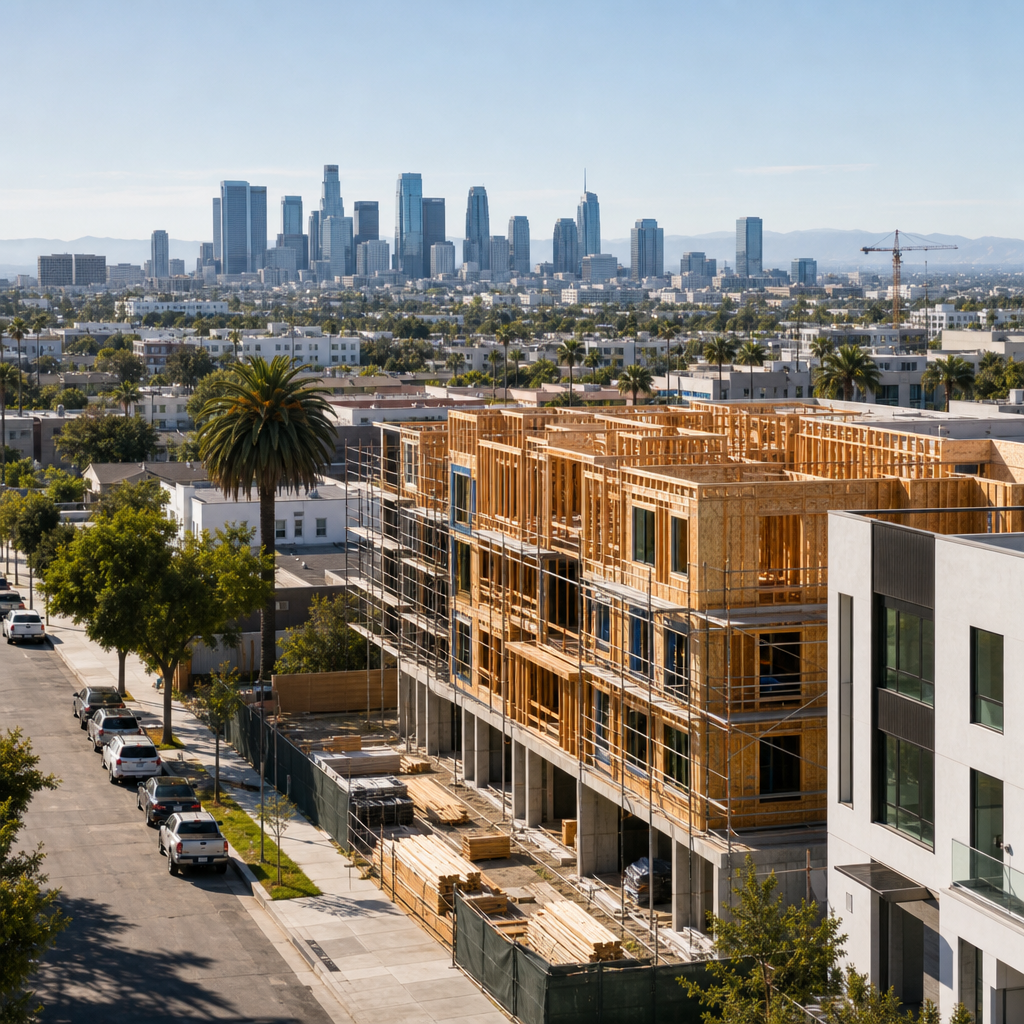
Quick answer: Los Angeles AB 130 CEQA exemption implementation is now visible through the City’s ZIMAS-based eligibility checklist for housing projects. The checklist reflects Public Resources Code Section 21080.66, which exempts qualifying infill housing development from CEQA review if the project satisfies strict location, density, zoning, environmental, tribal consultation, and documentation requirements. For Los Angeles owners and developers, the opportunity is faster environmental clearance, but only when the site and design package are clean enough to prove eligibility early.
AB 130 is a 2025 California housing budget trailer bill that added Public Resources Code Section 21080.66, a statutory CEQA exemption for qualifying urban infill housing development projects.
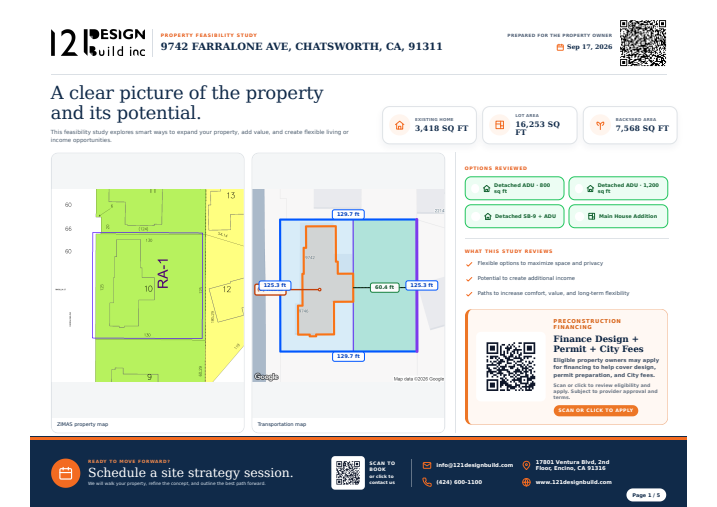
What is the Los Angeles AB 130 CEQA exemption checklist?
The Los Angeles AB 130 CEQA exemption checklist is the City’s property-level screening tool for determining whether a proposed housing project may qualify for the statewide infill housing CEQA exemption. The City’s ZIMAS checklist states that projects meeting AB 130 eligibility must complete an Environmental Assessment Form, pay applicable fees, submit required documentation, and complete or close any required tribal consultation before a discretionary decision is issued.
The checklist is not a self-executing approval. ZIMAS prepopulates some site data, but the City warns that automatic responses are for reference only and must be verified by planning staff after a project is filed. That distinction matters in Los Angeles, where a parcel may look eligible on a map but still raise issues involving historic resources, hillside conditions, coastal overlays, fire hazard zones, flood hazards, freeway adjacency, or prior contamination.
For design and entitlement strategy, the checklist functions like an early risk screen. A project team should use it before schematic design is locked, not after the owner has already paid for a full concept that may miss a density, use, or site-condition requirement.
What changed under the Los Angeles AB 130 CEQA exemption?
The major change is that qualifying infill housing can avoid traditional project-level CEQA review under Public Resources Code Section 21080.66. Before AB 130, many multifamily and mixed-use housing projects in Los Angeles still had to rely on categorical exemptions, sustainable communities environmental assessments, negative declarations, mitigated negative declarations, or environmental impact reports depending on the approval path and site conditions.
AB 130 was approved by Governor Gavin Newsom and filed with the Secretary of State on June 30, 2025, and the bill text states that it took effect immediately as a budget-related measure. Section 21080.66 now says CEQA does not apply to any aspect of a qualifying housing development project, including permits, approvals, and required public improvements, if the project meets all statutory conditions.
The law was later amended by SB 158, effective October 11, 2025. One practical current-law detail is that most eligible project sites may be up to 20 acres, while a builder’s remedy project or certain older Housing Accountability Act projects must be no more than four acres under the current codified version of Section 21080.66.
Which Los Angeles housing projects may qualify for the Los Angeles AB 130 CEQA exemption?
A Los Angeles housing project may qualify if it is an infill housing development that satisfies AB 130’s use, site, density, consistency, and environmental criteria. The City’s checklist asks first whether the proposal is residential-only, a mixed-use project with enough residential floor area, transitional or supportive housing, or farmworker housing.
For mixed-use projects, the Los Angeles checklist summarizes two potential pathways. One is that at least two-thirds of the development’s square footage is residential. Another applies to projects with at least 500 net new residential units where at least 50 percent of new or converted square footage is residential and the project is not a hotel, motel, bed and breakfast inn, or other transient lodging.
The site must also fit the infill framework. Under Section 21080.66, the project site must be within an incorporated municipality or urban area, and it must have been previously developed with an urban use or be surrounded by specified levels of urban development. In Los Angeles, that can cover many commercial corridors, underused parcels, and already-urbanized multifamily sites, but the rule is still parcel-specific.
What site and design criteria matter most in Los Angeles?
The most important criteria are site size, residential use, minimum density, zoning or general plan consistency, historic-resource status, and environmental constraints. The City checklist requires the project site not to exceed 20 acres, the project to be consistent with applicable general plan and zoning rules, and the density to be at least 15 units per acre as summarized in the Los Angeles screening form.
The checklist also asks whether the project avoids demolition of a historic structure that was placed on a national, state, or local historic register before the preliminary application was submitted. In Los Angeles, this makes early due diligence on SurveyLA, Historic Preservation Overlay Zones, designated monuments, and prior resource evaluations especially important.
Environmental exclusions can be just as important as zoning. The City’s checklist screens for coastal-zone limits, farmland, wetlands, very high fire hazard severity zones, hazardous waste sites, earthquake fault zones, special flood hazard areas, floodways, conservation lands, protected species habitat, and conservation easements. Some constraints do not automatically defeat eligibility if the project satisfies specific building-code or mitigation standards, but they do require careful documentation.
Does AB 130 eliminate environmental due diligence in LA?
No, AB 130 does not eliminate environmental due diligence; it changes the review pathway for eligible projects. Section 21080.66 requires a Phase I environmental assessment as a condition of approval, and if recognized environmental conditions are found, further hazardous-substance assessment and cleanup or mitigation may be required before certificate of occupancy.
The statute also imposes special design requirements for housing located within 500 feet of a freeway. Those include centralized HVAC, outdoor air intakes facing away from the freeway, MERV 16 filtration for outside and return air, filter replacement at manufacturer intervals, and no balconies facing the freeway. In Los Angeles, where many developable infill parcels sit near the 101, 110, 405, 10, 5, or 134, these requirements can affect massing, mechanical design, facade planning, and unit layouts.
AB 130 also creates a tribal consultation process. Local governments must notify traditionally and culturally affiliated California Native American tribes, and consultation timelines can affect the approval schedule. From a permitting standpoint, that means the project team should prepare site maps, scope descriptions, and any known cultural-resource materials early enough to avoid delaying the entitlement calendar.
What does this mean for Los Angeles homeowners and developers?
For Los Angeles property owners, AB 130 creates a stronger path to faster housing approvals when the project is designed around eligibility from day one. The biggest value is not simply avoiding an EIR; it is reducing uncertainty before lenders, investors, neighbors, or appeal bodies can turn environmental clearance into the main schedule risk.
Small property owners may see the most benefit when converting an underused residential or commercial site into new infill housing, especially where the project is consistent with zoning or can use density bonus law without losing consistency. Larger developers may benefit on mixed-use and multifamily projects where the residential program is dominant and the site has already been urbanized.
However, a project that barely meets density, relies on a questionable historic-resource assumption, or ignores freeway, fault, flood, fire, or contamination issues can still lose time. The practical strategy is to treat the AB 130 checklist as a design brief: verify the parcel, confirm the entitlement route, align the unit count and use mix, and coordinate environmental documentation before filing.
How can 121 Design Build help with AB 130 projects in Los Angeles?
121 Design Build helps Los Angeles owners turn AB 130 eligibility into permit-ready architecture and construction strategy. For ground-up apartments, townhomes, and small-lot housing, our New Construction team can align site planning, unit mix, code analysis, and documentation with the exemption criteria from the first feasibility study.
For projects using affordability incentives, density bonus concessions, or ED-1-style delivery goals, our Affordable Housing / ED-1 service connects entitlement strategy with buildable design. Owners considering additions, adaptive reuse, or residential intensification can also use our Addition & Remodel team to evaluate whether a scope belongs on an AB 130 path or another permitting route.
Mixed-use projects need coordination between residential planning, storefront or commercial space, parking, accessibility, structure, and MEP systems. Our Commercial Architecture team supports that cross-disciplinary work under one roof. If you are evaluating a Los Angeles parcel for infill housing, contact 121 Design Build to discuss feasibility, entitlement risk, and a permit-ready design plan.
Key Takeaways
- AB 130 added Public Resources Code Section 21080.66, a statutory CEQA exemption for qualifying infill housing projects.
- The City of Los Angeles is using a ZIMAS-based checklist to screen AB 130 eligibility, but planning staff must verify the results.
- Eligible projects must satisfy site size, residential use, urban infill, density, consistency, historic-resource, environmental, and tribal consultation requirements.
- The exemption can shorten environmental clearance, but it does not remove Phase I environmental assessment, freeway-adjacent design, or hazard-related documentation duties.
- Early feasibility analysis is essential because one site constraint can change the entitlement strategy.
Frequently Asked Questions
Is every Los Angeles infill housing project exempt from CEQA under AB 130?
No. A project must meet every applicable requirement in Public Resources Code Section 21080.66 and the City’s checklist. Site constraints, historic resources, transient lodging uses, inadequate density, or inconsistency with applicable planning standards can affect eligibility.
Does the Los Angeles AB 130 CEQA exemption apply to mixed-use projects?
Yes, some mixed-use projects may qualify if they satisfy the residential-use thresholds and all other statutory criteria. The City checklist includes a pathway for projects where at least two-thirds of the square footage is residential, plus a separate large-project pathway summarized in the checklist.
Will AB 130 make my Los Angeles project ministerial?
Not necessarily. AB 130 can exempt qualifying projects from CEQA, but a project may still need discretionary planning approvals, building permits, tract-map approvals, haul-route approvals, or other City actions. The exemption changes environmental review; it does not erase all entitlement requirements.
What documents should I prepare before claiming AB 130 eligibility?
Expect to prepare a complete project description, site plans, zoning and density analysis, historic-resource review, Environmental Assessment Form, Phase I environmental assessment, and documentation addressing any mapped hazards. Tribal consultation materials may also be required through the City process.
Can a project near a Los Angeles freeway still qualify?
Yes, but housing within 500 feet of a freeway must meet specific building-design requirements in Section 21080.66. These include centralized HVAC, MERV 16 filtration, air intakes oriented away from the freeway, ongoing filter replacement, and no balconies facing the freeway.
Sources
- City of Los Angeles ZIMAS AB 130 CEQA Exemption Eligibility Checklist
- California Public Resources Code Section 21080.66
- AB 130 bill text, California Legislature
- Governor of California announcement on AB 130 and SB 131
This article is general information from a design-build and permitting perspective and is not legal advice.
#AB130 #CEQA #LosAngelesHousing #LADevelopment #InfillHousing #ZIMAS #MultifamilyHousing #DensityBonus #PermitReady #DesignBuild #AffordableHousing #LAPermits
Browse Our Related Articles & Blogs
Dive into a wide range of blog posts featuring the latest projects, creative design ideas and innovative sustainable practices. Stay informed with expert industry updates that shape the future of construction.


Frequently Asked Questions
Can’t find the answer you’re looking for? Please contact with our customer service.
Can’t find the answer you’re looking for? Please contact with our customer service.
Ready to build Smarter?
Book your free consultation today and discover how quickly we can turn your ideas into permits and long-term property value. Our team is here to guide you from the first sketch to final approval.