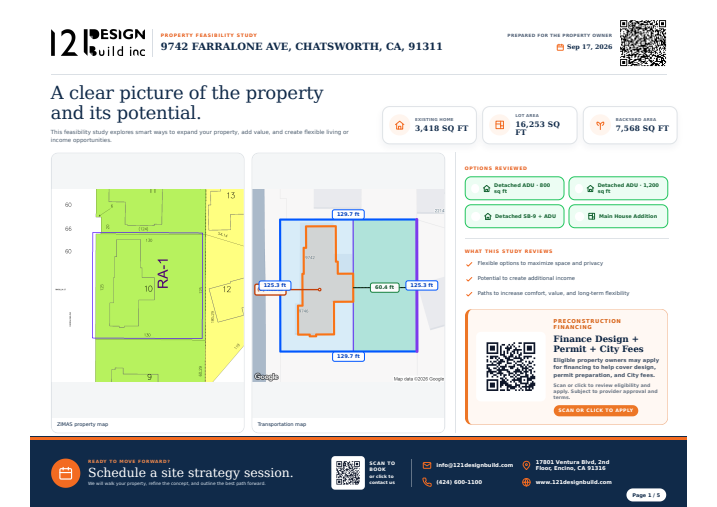
Los Angeles Altadena Rebuild Rules: SB 1090 Explained


Quick answer: Los Angeles Altadena rebuild rules may change if SB 1090 becomes law, because the bill would temporarily stop certain state-mandated ministerial approvals for SB 9 duplexes, SB 9 urban lot splits, and SB 1123 small-lot housing projects in Altadena ZIP codes 91001 and 91003. As of June 29, 2026, SB 1090 is an active bill in the Assembly committee process, not a signed law, with a hearing scheduled for July 1, 2026. For Eaton Fire survivors, the practical point is that ordinary like-for-like rebuilding remains a separate LA County permit path, while speculative density projects could face a pause if the bill passes.
SB 1090 is a California land-use bill, authored by Senator Sasha Renée Pérez with Assemblymember John Harabedian as principal coauthor, that would amend Government Code sections governing SB 9 and SB 1123-style streamlined housing approvals in Altadena.
What are the Los Angeles Altadena rebuild rules at issue?
The Los Angeles Altadena rebuild rules at issue are state laws that limit local discretion when a qualifying housing project meets objective standards. SB 9 generally requires ministerial review for up to two units on many single-family parcels and for qualifying urban lot splits, while SB 1123 expanded the Starter Home Revitalization Act to allow streamlined review for certain small housing developments and subdivisions, including vacant single-family-zoned lots.
The current SB 1090 bill text says the affected approvals involve Government Code sections 65852.21, 65852.28, 66411.7, and 66499.41. In plain terms, those sections are the legal machinery behind SB 9 duplex and lot-split approvals and SB 1123 small-lot subdivision approvals. They are “ministerial” because the agency generally applies objective rules without a discretionary hearing.
That distinction matters in Altadena because much of the community is rebuilding after the Eaton Fire, which began on January 7, 2025 and affected unincorporated Altadena and nearby areas, according to LA County Planning. Ministerial laws can speed housing production, but they can also reduce the ability of local officials to consider neighborhood-scale recovery concerns beyond objective code criteria.
What does SB 1090 mean for Los Angeles Altadena rebuild rules?
SB 1090 would temporarily remove the state requirement that LA County ministerially approve specified SB 9 and SB 1123 projects in Altadena ZIP codes 91001 and 91003 during the recovery period. The Legislative Counsel’s Digest for the June 22, 2026 version says the bill applies to applications submitted on or after January 7, 2025 and before January 7, 2030, with exceptions for applications where property rights have vested.
That is a major change from the prior baseline. Without SB 1090, a qualifying SB 9 or SB 1123 project can be entitled to fast, non-discretionary processing even when neighbors or local representatives object to the larger land-use pattern. With SB 1090, those specific ministerial mandates would not apply in the identified Altadena ZIP codes for the covered period, unless the vested-rights exception applies.
The bill does not read like a blanket ban on rebuilding a destroyed home. It targets state-mandated streamlined approvals for particular density and subdivision pathways. Homeowners pursuing a like-for-like Eaton Fire rebuild, a conventional custom home, or a code-compliant remodel still need to follow LA County’s rebuild process, zoning standards, building code, fire code, and health requirements.
Why are Altadena residents worried about SB 9 and SB 1123 projects?
Altadena residents are worried because post-disaster land sales can combine with streamlined housing laws to accelerate redevelopment before displaced owners have a realistic chance to return. State housing laws were written to increase supply, but disaster recovery raises different questions: insurance gaps, temporary displacement, infrastructure capacity, evacuation routes, historic character, and the timing of owner decisions under financial stress.
SB 1123 is especially important because HCD’s housing law fact sheet describes it as expanding streamlined housing approvals for vacant single-family lots and facilitating up to 10 units, excluding ADUs, under the Starter Home Revitalization Act. In a fire-damaged neighborhood, many lots can appear functionally vacant after structures are destroyed, which is why the Altadena debate is not just theoretical.
Governor Newsom’s Executive Order N-32-25 already gave local governments more discretion to limit SB 9 development in very high fire hazard severity zones within the Palisades and Eaton fire burn scars. But that order did not solve every Altadena concern because it was tied to very high fire hazard severity zones and SB 9; SB 1090 is aimed at a broader Altadena-specific legislative fix, including SB 1123-related code sections.
What is the current status of SB 1090?
SB 1090 is not yet law. As of the state Legislature’s status page reviewed on June 29, 2026, the bill was last amended on June 22, 2026, located in the Assembly, assigned to the Assembly Housing and Community Development Committee, and scheduled for a July 1, 2026 committee hearing.
The Senate passed SB 1090 on May 27, 2026 by a 30-9 vote, then sent it to the Assembly. Since then, the bill has been amended in the Assembly and re-referred through committee. Until the Assembly passes it, any required concurrence occurs, and the Governor signs it, Altadena owners should treat SB 1090 as a pending proposal rather than an enforceable rule.
How does this affect Eaton Fire rebuilding permits in Altadena?
For most Eaton Fire homeowners, the immediate permit question is still whether the project is like-for-like or non-like-for-like under LA County rules. LA County states that like-for-like replacement structures are generally the same size, location, and use as the damaged structure, and may be approved with modifications if they do not increase floor area, size, height, or footprint by more than 10 percent or 200 square feet, whichever is greater.
LA County also says like-for-like structures do not need to comply with current zoning code requirements, but they must comply with current building, fire, and health and safety code requirements. Complete like-for-like applications are targeted for review within 10 business days, with subsequent reviews in 5 business days, although site-specific issues can still add time.
Non-like-for-like projects are different. If an owner proposes a larger replacement, a new configuration, income-restricted housing, an SB 9 lot split, a standalone ADU, or development that does not meet the Altadena Community Standards District, the project may trigger additional zoning review, a Certificate of Compliance, a CSD modification, an oak tree permit, a variance, septic review, or other approvals.
What should Los Angeles Altadena rebuild rules mean for project planning?
Los Angeles Altadena rebuild rules should push owners to decide early whether their goal is speed, added value, added units, or long-term entitlement flexibility. Each path leads to a different design and permitting strategy.
If speed is the priority, a carefully documented like-for-like rebuild is usually the cleanest route. If value creation is the priority, the team should study ADUs, JADUs, additions, lot constraints, setbacks, parking, sewer or septic capacity, fire-hardening, and protected trees before committing to a massing concept. If a subdivision or SB 9 strategy is under consideration, SB 1090’s pending status makes timing and vesting analysis critical.
Design discipline is essential. Plans that look feasible at a concept level can stall when they reach LA County Planning, Public Works Building and Safety, Fire, or Public Health. A permit-ready package should address zoning, structural design, Title 24 energy compliance, WUI and fire-resistant construction, grading, utilities, drainage, and any wastewater constraints before submittal.
Key Takeaways
- SB 1090 would pause specified SB 9 and SB 1123 ministerial approvals in Altadena ZIP codes 91001 and 91003 for the covered recovery period.
- As of June 29, 2026, SB 1090 is active in the Assembly committee process and is not yet law.
- The bill targets streamlined density and subdivision approvals; it does not replace LA County’s like-for-like Eaton Fire rebuild process.
- Altadena projects still need careful review for zoning, the Altadena Community Standards District, fire code, building code, utilities, and septic or sewer issues.
- Owners considering SB 9, ADUs, additions, or non-like-for-like rebuilding should confirm feasibility before spending heavily on plans.
How can 121 Design Build help with Altadena and LA County rebuild planning?
121 Design Build helps Los Angeles-area owners convert uncertainty into a permit-ready path. For fire recovery and replacement homes, our New Construction team can evaluate site constraints, massing, building code, fire-hardening, and agency routing before drawings move into plan check.
For owners who want to return home but improve layout, size, or long-term value, our Addition & Remodel work is directly relevant to non-like-for-like planning. If rental flexibility or family housing is part of the recovery plan, we can assess ADU & JADU options alongside main-house design. For owners studying subdivision or missing-middle strategies, our SB9 service can help frame the feasibility questions affected by SB 1090.
If you own property in Altadena, Los Angeles, or unincorporated LA County and need a practical read on design, permits, and construction sequencing, contact 121 Design Build to discuss the next step.
Frequently Asked Questions
Is SB 1090 already law in California?
No. As of June 29, 2026, SB 1090 is pending in the Assembly committee process and has not been signed by the Governor. Owners should monitor the July 1, 2026 Assembly Housing and Community Development Committee hearing and later legislative actions.
Would SB 1090 stop me from rebuilding my Altadena home?
No, SB 1090 is not written as a ban on rebuilding homes destroyed or damaged by the Eaton Fire. It addresses specified SB 9 and SB 1123 ministerial approval requirements for certain housing developments and subdivision maps in Altadena ZIP codes 91001 and 91003.
Can I still build an ADU in Altadena after the Eaton Fire?
Generally, ADUs remain a separate permit pathway, and LA County says standalone ADU applications can be submitted for destroyed-home sites under regular ADU standards. However, ADUs can affect wastewater, parking, fire access, protected trees, and overall site feasibility, so they should be studied early.
What is the difference between like-for-like and non-like-for-like rebuilding?
A like-for-like rebuild is generally the same size, location, and use as the destroyed legal structure, with limited modifications allowed by LA County. A non-like-for-like rebuild changes the project enough that current zoning standards or additional approvals may apply.
Why does Altadena use LA County rules instead of City of Los Angeles rules?
Altadena is an unincorporated community, so LA County functions as the local land-use authority rather than the City of Los Angeles. That means Altadena rebuilds typically involve LA County Regional Planning, Public Works, Fire, and Public Health rather than LADBS.
Sources
- California Legislative Information: SB 1090 bill text and status
- Governor Newsom Executive Order N-32-25
- LA County Planning: Eaton Fire recovery and rebuilding guidance
- California HCD Housing Law Fact Sheets, April 2026
This article is general information from a design-build and permitting perspective and is not legal advice.
#Altadena #LosAngeles #SB1090 #EatonFire #LARebuild #SB9 #ADU #JADU #LACountyPermits #DesignBuild #Architecture #HousingPolicy
Browse Our Related Articles & Blogs
Dive into a wide range of blog posts featuring the latest projects, creative design ideas and innovative sustainable practices. Stay informed with expert industry updates that shape the future of construction.


Frequently Asked Questions
Can’t find the answer you’re looking for? Please contact with our customer service.
Can’t find the answer you’re looking for? Please contact with our customer service.
Ready to build Smarter?
Book your free consultation today and discover how quickly we can turn your ideas into permits and long-term property value. Our team is here to guide you from the first sketch to final approval.