Los Angeles Affordable Housing Permits: AB 1997 Update

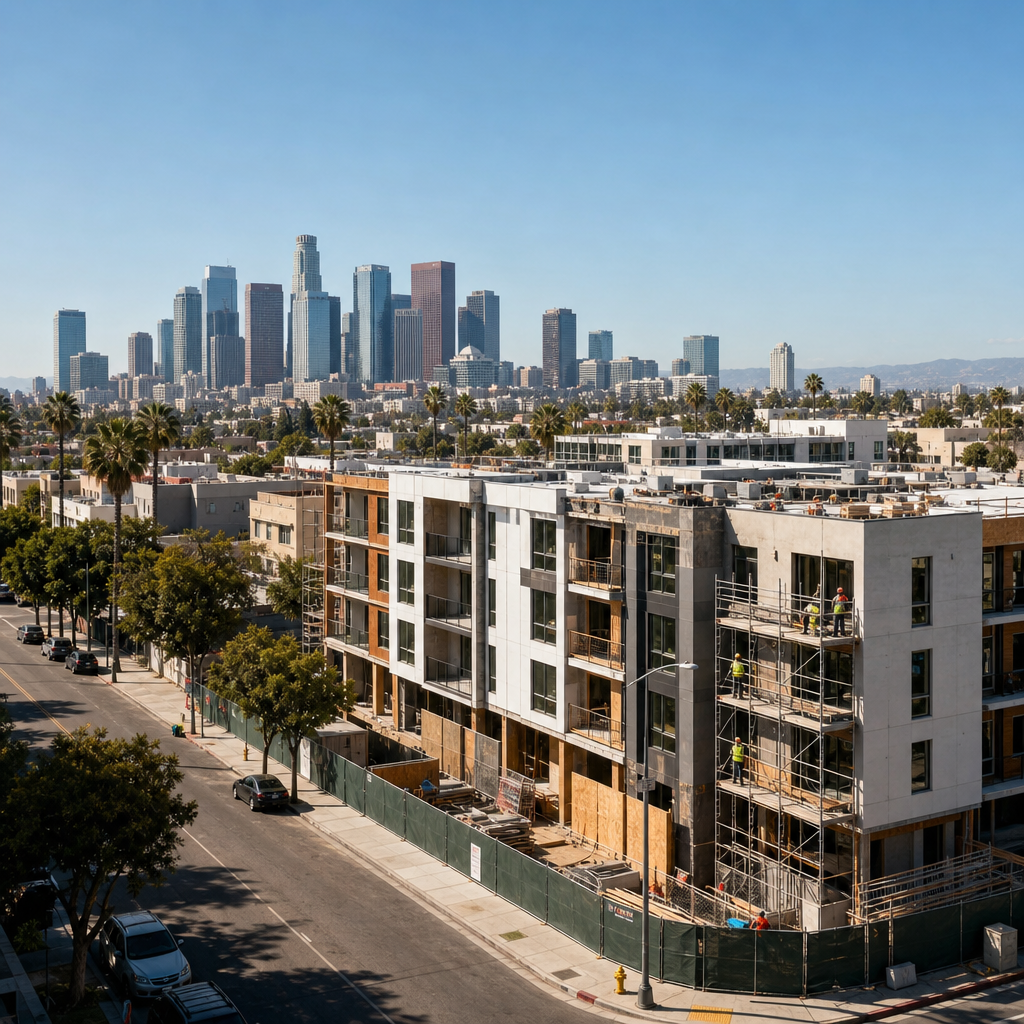
Quick answer: Los Angeles affordable housing permits could move faster if California lawmakers enact AB 1997, a pending 2026 bill that would tighten certain Permit Streamlining Act deadlines for qualifying housing projects. As of July 16, 2026, AB 1997 has passed the Assembly, has been amended in the Senate, and is pending in the Senate Appropriations Committee with a hearing listed for August 3, 2026. The biggest proposed change is a 30-day approval-or-denial deadline after certification of an environmental impact report for housing projects where at least 90% of units are affordable to very low- or extremely low-income households, subject to financing-notice conditions.
AB 1997 is a California Assembly bill by Assembly Member Alex Lee that would amend Government Code Sections 65928, 65950, and 65952 and add Government Code Section 65928.6 to modify approval timelines for housing development projects under the Permit Streamlining Act.
Key Takeaways
- AB 1997 is not yet law; as of July 16, 2026, it is an active bill in the Senate committee process.
- The bill targets project approval timelines after CEQA review, not every local plan-check, inspection, utility, or post-entitlement building permit step.
- For qualifying projects with an EIR, AB 1997 would add a 30-day decision deadline for projects with at least 90% very low- or extremely low-income units.
- The bill also defines housing development project for the Permit Streamlining Act by reference to Government Code Section 65905.5.
- For Los Angeles developers, the practical lesson is that speed only helps when entitlement strategy, CEQA documentation, funding evidence, and permit-ready drawings are aligned early.
What would AB 1997 change for Los Angeles affordable housing permits?
AB 1997 would shorten a specific approval window for deeply affordable housing projects after environmental review is complete. Under the June 18, 2026 amended bill text, a lead agency would have 30 days from EIR certification to approve or disapprove a housing development project if at least 90% of the units are affordable to very low- or extremely low-income households and the applicant has met specified public-financing notice requirements.
That matters because the existing Permit Streamlining Act already imposes deadlines, but those deadlines vary by project type and CEQA path. The current structure includes 180 days after EIR certification for development projects generally, 90 days for housing development projects, and 60 days for certain housing projects where at least 49% of units are affordable to very low- or low-income households. AB 1997 would add a faster 30-day path for the most deeply affordable category.
The bill text is precise about affordability. Rental units must be set at affordable rent for at least 30 years, and owner-occupied units must be available at affordable housing cost. The project applicant must also have given the lead agency written notice, before the application is deemed complete, that the project has applied or will apply for public financing, tax credits, bond authority, or other federal or public agency assistance necessary to make the affordability work.
Why do Los Angeles affordable housing permits matter for RHNA?
Los Angeles affordable housing permits matter because the City of Los Angeles has a large 2021-2029 Regional Housing Needs Allocation, and the lower-income share is substantial. Los Angeles City Planning states that the city’s Housing Element must accommodate 456,643 total units for the 2021-2029 cycle, including 184,721 units affordable to lower-income households.
The Regional Housing Needs Allocation, or RHNA, is not simply a production wish list. It drives the city’s Housing Element planning obligations, rezoning programs, and housing-policy framework. The California Department of Housing and Community Development also uses local Annual Progress Reports to track each jurisdiction’s progress toward RHNA over the planning cycle.
The July 15, 2026 Davis Vanguard op-ed by Patrick Range McDonald argues that California needs faster permitting to produce more lower-income housing and identifies AB 1997 as one tool. For Los Angeles, the larger point is familiar: affordable housing does not fail only because of architecture or construction cost. It often stalls when entitlement review, CEQA timing, funding deadlines, plan corrections, and agency coordination do not move together.
What stage is AB 1997 in now?
AB 1997 is still pending, so property owners and developers should not treat it as an available approval pathway today. California Legislative Information lists the bill as an active bill in the committee process, located in the Senate, with the committee location shown as Senate Appropriations and a hearing date of August 3, 2026.
The bill was introduced on February 17, 2026, passed the Assembly on May 26, 2026, and was amended in the Senate on June 18, 2026. The July 1, 2026 history entry states that it passed out of committee and was re-referred to Senate Appropriations. If the bill ultimately passes both houses and is signed by the Governor in 2026 without a special effective date, the general California rule for a regular-session statute would point to January 1, 2027.
That timing distinction is important. AB 1997 can influence how developers plan financing, entitlement records, and CEQA strategy now, but it cannot be relied upon until enacted and effective. In a feasibility study, it should be treated as a pending policy variable rather than a guaranteed entitlement tool.
Who would AB 1997 affect in Los Angeles?
AB 1997 would most directly affect cities, counties, affordable housing developers, and applicants pursuing qualifying housing development projects. In Los Angeles, that means sponsors of deeply affordable multifamily projects, nonprofit and mission-driven developers, public-private partnerships, and private developers structuring projects around tax credits, bond financing, or other public funding sources.
It would not automatically apply to every apartment project, mixed-use building, ADU, remodel, or market-rate multifamily development. The 30-day EIR provision is tied to a housing development project with at least 90% very low- or extremely low-income affordability and the required financing-related notice. Projects that are ministerial, CEQA-exempt, processed under ED 1, or handled through another streamlining statute may involve different timelines and eligibility tests.
Neighborhood stakeholders are also affected indirectly. Faster decision deadlines do not eliminate objective standards, environmental documentation, affordability covenants, or agency review. They do, however, increase the value of a clear administrative record, complete submittals, and early resolution of design, access, grading, life-safety, and utility issues.
How should LA developers prepare if permitting timelines tighten?
Developers should prepare by making projects complete earlier, not merely by hoping the city acts faster. A compressed approval window rewards teams that front-load zoning analysis, site constraints, CEQA documentation, funding evidence, architectural coordination, and agency questions before formal deadlines begin.
For a Los Angeles affordable housing project, that means confirming the base zoning, density bonus strategy, parking assumptions, replacement-housing issues, objective design standards, fire access, utility capacity, and covenant structure before plans are locked. It also means documenting public-financing dependencies in the format and timing required by the statute if AB 1997 becomes law.
From a design-build perspective, the risk is that an entitlement may move faster than the drawings, consultant reports, or construction pricing. That can produce avoidable redesigns, plan-check delays, or financing gaps. The best teams treat streamlining as a coordination discipline: one schedule, one source of truth, and permit-ready documentation that anticipates agency comments.
How can 121 Design Build help with Los Angeles affordable housing permits?
121 Design Build helps Los Angeles property owners and developers translate housing policy into buildable, permit-ready projects. For projects pursuing 100% affordable or ED 1-style strategies, our Affordable Housing / ED-1 team can evaluate site eligibility, entitlement constraints, affordability requirements, and documentation needs early.
For ground-up multifamily or mixed-use projects, our New Construction and Commercial Architecture services help coordinate architecture, code analysis, consultant inputs, and construction planning under one roof. For owners whose site is not a fit for a larger affordable project, an ADU & JADU feasibility review may identify a smaller housing-production path.
If you are evaluating an affordable housing site in Los Angeles, the right next step is not to wait for AB 1997. It is to understand your entitlement path, funding dependencies, and permit-readiness now. Contact 121 Design Build to discuss your site, timeline, and permitting strategy.
Frequently Asked Questions
Is AB 1997 already law in California?
No. As of July 16, 2026, AB 1997 is an active bill in the California Senate committee process and is not yet an enacted statute. Its next listed committee location is Senate Appropriations, with a hearing date of August 3, 2026.
Would AB 1997 speed up every Los Angeles housing permit?
No. The 30-day provision is aimed at qualifying housing development projects after EIR certification, especially projects with at least 90% very low- or extremely low-income units and required financing documentation. It does not automatically shorten every LADBS plan check, inspection, utility approval, or post-entitlement construction permit.
What is the main difference between the current rule and AB 1997?
The main difference is that AB 1997 would add a 30-day approval-or-denial timeline after EIR certification for qualifying deeply affordable housing projects. Existing Permit Streamlining Act timelines include longer windows, such as 90 days for housing projects after EIR certification and 60 days for certain affordable housing projects meeting a 49% affordability threshold.
Would AB 1997 apply to ED 1 projects in Los Angeles?
Not necessarily. ED 1 is a Los Angeles mayoral and city implementation framework for expediting shelters and 100% affordable housing, while AB 1997 is a proposed state law amending Permit Streamlining Act timelines. A project could involve overlapping affordable-housing strategies, but eligibility must be reviewed project by project.
What should developers do before AB 1997 is decided?
Developers should proceed with feasibility, zoning analysis, funding strategy, and permit-ready design work rather than waiting. If AB 1997 becomes law, projects with complete records and coordinated drawings will be better positioned to benefit from shorter approval timelines.
Sources
- Davis Vanguard: Op-ed | California Must Speed Up Permitting to Build More Lower-Income Housing
- California Legislative Information: AB 1997 bill text
- California Legislative Information: AB 1997 status
- Los Angeles City Planning: 2021-2029 Housing Element
- California HCD: Annual Progress Reports and RHNA tracking
This article provides general information from a design-build and permitting perspective and is not legal advice.
#LosAngelesHousing #AffordableHousing #AB1997 #LAPermits #ED1 #DesignBuild #Architecture #RHNA #HousingPolicy #MultifamilyHousing #PermitReady #121DesignBuild
Browse Our Related Articles & Blogs
Dive into a wide range of blog posts featuring the latest projects, creative design ideas and innovative sustainable practices. Stay informed with expert industry updates that shape the future of construction.

Frequently Asked Questions
Can’t find the answer you’re looking for? Please contact with our customer service.
Can’t find the answer you’re looking for? Please contact with our customer service.
Ready to build Smarter?
Book your free consultation today and discover how quickly we can turn your ideas into permits and long-term property value. Our team is here to guide you from the first sketch to final approval.