Los Angeles SB 9 Housing Laws: Altadena Pushback Grows


Quick answer: Los Angeles SB 9 housing laws are at the center of Altadena’s post-Eaton Fire rebuilding fight because residents and local officials say statewide lot-split and small-subdivision rules could accelerate speculative multi-unit redevelopment on burned single-family lots. The legislative response is Senate Bill 1090, the Keep Altadena Land in Altadena Hands Act, which would temporarily make SB 9 and SB 1123 ministerial approval requirements inapplicable to certain applications in ZIP codes 91001 and 91003 submitted on or after January 1, 2027, and before January 7, 2030, with exceptions for certain vested and 100% affordable housing projects. As of July 12, 2026, SB 1090 is an active bill in the Assembly, not a signed law.
SB 1090 is a California land-use bill that would create a narrow Altadena-specific pause on specified ministerial housing approval pathways created by SB 9 and SB 1123 during the Eaton Fire recovery period.
What are Los Angeles SB 9 housing laws and why is Altadena pushing back?
Los Angeles SB 9 housing laws generally refer to California’s SB 9 framework as applied in the Los Angeles region, allowing eligible single-family parcels to use streamlined approval for two-unit development, urban lot splits, or both. The California Department of Housing and Community Development describes SB 9 as requiring ministerial approval for up to two primary units in a single-family zone, a subdivision into two parcels, or both, subject to eligibility rules.
Altadena’s pushback is not simply opposition to all new housing. The concern is timing, disaster recovery, and control of land after the January 2025 Eaton Fire. Senator Sasha Renée Pérez’s office says residents are worried that SB 9 and SB 1123 are being used after the fire to acquire damaged properties and pursue higher-density projects that may not match the community’s rebuilding goals.
That distinction matters for Los Angeles property owners. SB 9 remains a statewide housing production tool, and in the City of Los Angeles, LA City Planning describes it as a way to streamline two-unit development and urban lot splits on qualifying single-family lots. Altadena, however, is an unincorporated Los Angeles County community facing an unusual post-disaster land market.
What would SB 1090 change for Los Angeles SB 9 housing laws?
SB 1090 would change the rules only for a defined Altadena geography: ZIP Code 91001 and ZIP Code 91003. In the July 2, 2026 amended bill text, the ministerial approval requirements in Government Code Sections 65852.21 and 66411.7 for SB 9 projects would not apply to covered applications in those ZIP codes submitted on or after January 1, 2027, and before January 7, 2030.
The bill also amends Government Code Sections 65852.28 and 66499.41, the small-lot subdivision and housing development provisions associated with SB 1123 and the Starter Home Revitalization framework. In practical permitting terms, that means eligible Altadena projects could lose the special by-right approval pathway during the covered window, rather than being reviewed under the same statewide ministerial rules that apply elsewhere.
The current text is narrower than the phrase “five-year moratorium” may suggest. Earlier descriptions of the policy have emphasized a five-year pause from the Eaton Fire date, but the operative July 2 bill language applies to applications submitted from January 1, 2027, through January 6, 2030. That is the key date range owners and design teams should track.
Which properties would SB 1090 affect in Altadena?
SB 1090 would affect covered housing development, urban lot split, parcel map, tentative map, and final map applications located in ZIP codes 91001 and 91003, if they rely on the specified SB 9 or SB 1123 ministerial approval provisions and are submitted during the bill’s covered period. It is not a Los Angeles citywide change and does not rewrite SB 9 for Encino, Sherman Oaks, Los Feliz, West LA, or other City of Los Angeles neighborhoods.
The bill includes important exceptions. The July 2 text says the pause would not apply to a proposed housing development or map where a preliminary application was submitted before January 1, 2027, if the required follow-up application is submitted within 180 days. It also preserves an exception for certain 100% affordable projects with recorded affordability restrictions of at least 55 years for rental units or 45 years for owner-occupied units, when developed by a qualifying community land trust, qualified nonprofit, or nonprofit housing sponsor.
For homeowners rebuilding a fire-damaged single-family home, SB 1090 should not be read as a ban on rebuilding. It targets specific ministerial density and subdivision pathways, not ordinary code-compliant reconstruction, additions, remodels, or other permits reviewed under applicable County rules.
What changed versus the prior SB 9 and SB 1123 rules?
Before SB 1090, the statewide baseline was that local agencies must ministerially process eligible SB 9 and SB 1123 applications without discretionary review or a public hearing. HCD’s SB 9 fact sheet says jurisdictions may impose objective zoning, subdivision, and design standards, but those standards generally cannot physically preclude qualifying units or qualifying lot splits.
SB 1123 expanded the small-subdivision pathway by revising the Starter Home Revitalization Act framework. The enacted SB 1123 text allows ministerial review for a qualifying subdivision resulting in 10 or fewer parcels and 10 or fewer residential units, and it extended eligibility to certain vacant single-family-zoned lots, with newly created single-family parcels generally no smaller than 1,200 square feet.
SB 1090 would not repeal those laws statewide. It would insert Altadena-specific carveouts into the Government Code so that, during the recovery window and within the specified ZIP codes, local agencies would not be required to use those ministerial approval mandates for covered applications unless an exception applies.
What is SB 1090’s current status as of July 12, 2026?
As of July 12, 2026, SB 1090 has passed the California Senate and has advanced through two Assembly committees, but it has not become law. The official bill history shows the Senate passed it on May 27, 2026, by a vote of 30-9, and Assembly committee actions occurred on July 1 and July 2, 2026.
The official status page lists SB 1090 in the Assembly and identifies the most recent amended date as July 2, 2026. The Assembly Housing and Community Development Committee vote was 11-1 on July 1, and the Assembly Local Government Committee vote was 10-0, followed by amendments reported July 2.
Because this is a moving bill, owners should not make purchase, subdivision, or rebuild decisions based only on headlines. The decisive documents are the latest bill text, the official status page, and the local permitting agency’s interpretation at the time an application is filed.
What does this mean for Los Angeles homeowners and developers?
For Los Angeles homeowners and developers outside Altadena, SB 1090 is a warning that statewide housing streamlining can still intersect with local disaster recovery, infrastructure capacity, political pressure, and objective design standards. SB 9, ADU law, SB 1123, density bonus rules, and local zoning overlays are not interchangeable; each has different eligibility, timeline, and design consequences.
For Altadena owners, the immediate issue is strategic timing. A project that appears viable under SB 9 or SB 1123 may face a different path if SB 1090 is enacted, especially if no valid preliminary application was filed before January 1, 2027. For rebuilds, additions, and replacement homes, the priority remains a permit-ready design package that aligns with fire rebuilding standards, objective zoning, utilities, access, and structural requirements.
For investors, the message is more cautionary. A burned-lot acquisition strategy built only around by-right lot splits or small-lot subdivisions may be exposed to legislative risk, community opposition, infrastructure review, and evolving local interpretation.
How can 121 Design Build help with Los Angeles SB 9 housing laws and rebuild strategy?
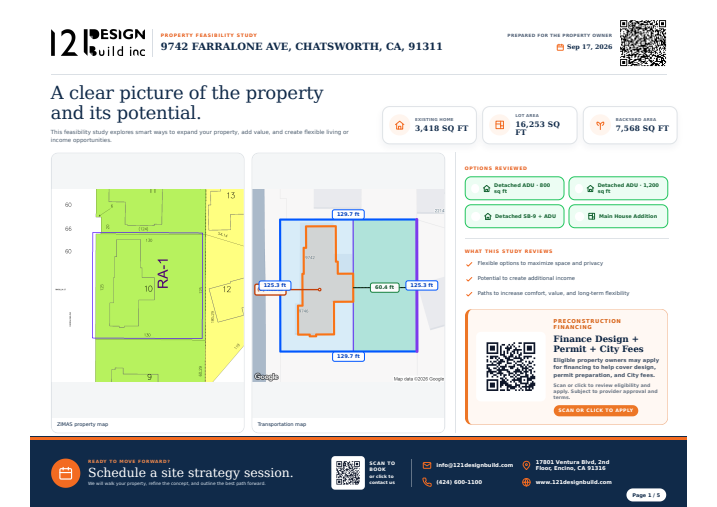
121 Design Build helps Los Angeles-area owners evaluate what can actually be permitted, not just what sounds possible under a state housing law headline. For ground-up replacement homes or small-lot development concepts, our New Construction team can assess site constraints, entitlement pathways, and permit-ready documentation from the start.
For owners considering an additional unit, junior unit, or rental strategy instead of a lot split, our ADU & JADU service can compare a lower-risk accessory-unit path against SB 9 or subdivision options. If the goal is to preserve an existing home while adding livable area, our Addition & Remodel team can help test scope, structure, zoning, and budget before design decisions harden.
For qualifying sites where SB 9 remains available, our SB9 service focuses on feasibility, objective standards, design coordination, and plan sets that can move efficiently through permitting. To discuss a Los Angeles or Altadena-area property, contact 121 Design Build for a feasibility consultation.
Key Takeaways
- SB 1090 is the Altadena-specific bill responding to resident pushback against SB 9 and SB 1123 after the Eaton Fire.
- The July 2, 2026 bill text applies to covered applications in ZIP codes 91001 and 91003 submitted on or after January 1, 2027, and before January 7, 2030.
- SB 1090 is not yet law as of July 12, 2026; it is active in the Assembly after passing the Senate and two Assembly committees.
- The bill includes exceptions for certain timely preliminary applications and qualifying 100% affordable housing projects by specified nonprofit or community land trust entities.
- Outside Altadena, SB 9 and SB 1123 remain important statewide tools, but eligibility depends on zoning, lot conditions, objective standards, hazards, and local implementation.
Frequently Asked Questions
Does SB 1090 ban SB 9 across Los Angeles?
No. SB 1090 is drafted for ZIP codes 91001 and 91003 in Altadena, not the entire City or County of Los Angeles. Los Angeles SB 9 housing laws would continue to apply elsewhere unless another local, state, or site-specific limitation applies.
When would the Altadena SB 9 and SB 1123 pause apply?
The current July 2, 2026 bill text applies to covered applications submitted on or after January 1, 2027, and before January 7, 2030. Because SB 1090 is not yet signed law, owners should verify the latest bill status before relying on that window.
Can Altadena homeowners still rebuild a fire-damaged house?
Yes, SB 1090 is aimed at specified ministerial density and subdivision pathways, not ordinary rebuilding of a lawful home. Rebuild projects still need to comply with applicable Los Angeles County zoning, building, fire, structural, and utility requirements.
What is the difference between SB 9 and SB 1123?
SB 9 generally streamlines two-unit development and two-lot urban lot splits on eligible single-family parcels. SB 1123 modifies the small-subdivision framework to allow ministerial review for qualifying projects with up to 10 parcels and 10 residential units, including certain vacant single-family-zoned lots.
Should I file an SB 9 application before SB 1090 takes effect?
Do not rush an application without a feasibility review. A preliminary application may matter under the current bill text, but eligibility, completeness, design standards, infrastructure, title issues, and local interpretation can determine whether the strategy is viable.
Sources
- California Legislative Information: SB 1090 bill text
- California Legislative Information: SB 1090 status
- California HCD: Duplexes and Lot Splits (SB 9) fact sheet
- California Legislative Information: SB 1123 bill text
This article provides general information from a design-build and permitting perspective and is not legal advice.
#LosAngelesHousing #SB9 #SB1090 #SB1123 #Altadena #EatonFire #LAPermits #LotSplit #ADU #DesignBuild #HousingPolicy #RebuildLA
Browse Our Related Articles & Blogs
Dive into a wide range of blog posts featuring the latest projects, creative design ideas and innovative sustainable practices. Stay informed with expert industry updates that shape the future of construction.


Frequently Asked Questions
Can’t find the answer you’re looking for? Please contact with our customer service.
Can’t find the answer you’re looking for? Please contact with our customer service.
Ready to build Smarter?
Book your free consultation today and discover how quickly we can turn your ideas into permits and long-term property value. Our team is here to guide you from the first sketch to final approval.