Is Your Encino Lot on LA's Housing Element Site List? What the Proposed Minimum-Density Cleanup Ordinance Means Before You Build

Quick answer
On November 10, 2026, the City Council's Planning and Land Use Management Committee approved, 3-0, a pair of citywide cleanup ordinances tied to Los Angeles's Housing Element site lists. The committee approved the proposed Housing Element Sites and Minimum Density amendment ordinance and the proposed Lower Income Sites ordinance, as recommended in the City Planning Commission report dated October 29, 2026, and asked the City Attorney to prepare and present the two draft ordinances. That is not a final Council vote, and it is not adopted law. Final drafts still have to be prepared, and the City Council still has to vote. The official agenda lists December 15, 2026, as the last day for Council action.
The 2025 Housing Element Sites and Minimum Density Ordinance is already in effect. This 2026 package is a cleanup and inventory update. If you are planning an Encino ADU, addition, SB 9 lot split, or small multi-unit project, the first practical step is to check whether your parcel is on a Housing Element inventory in ZIMAS before you lock a design or a unit count.
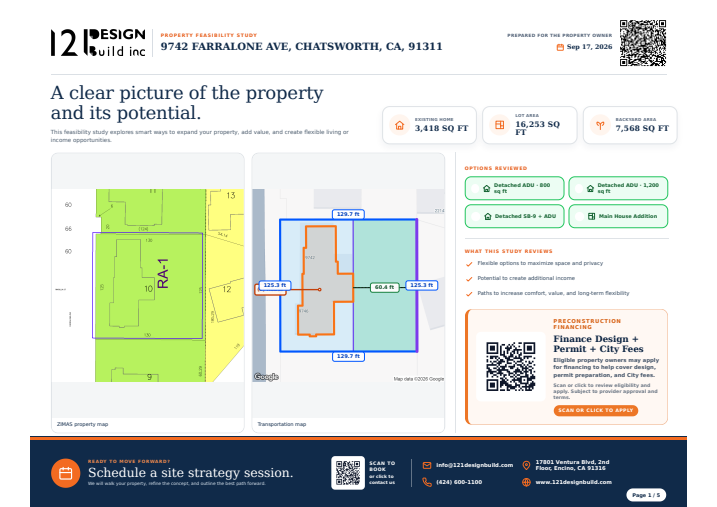
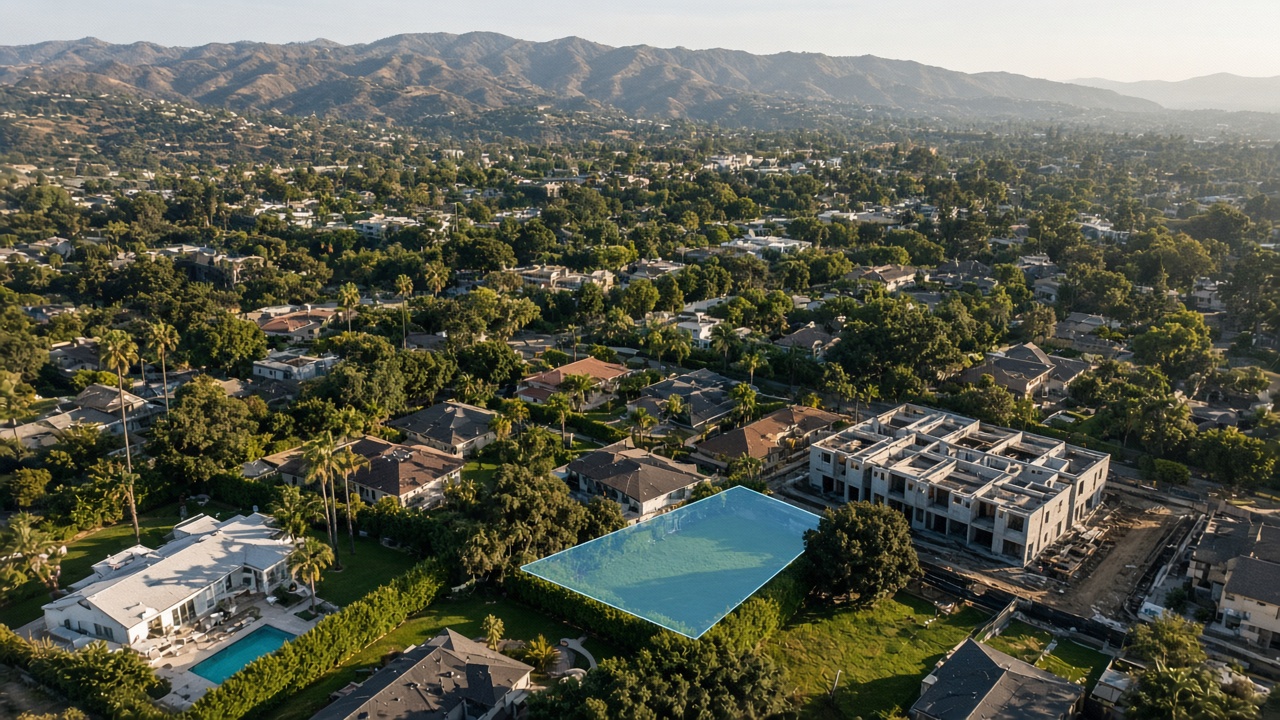
Images are conceptual illustrations, not photographs of an actual parcel, official map, or 121 Design Build project.

Short definitions
- Housing Element Sites: parcels listed in the City's 2021-2029 Housing Element inventory of land suitable for residential development, including related pipeline and rezoning sites described in the City Planning staff report.
- Prior Housing Element Sites: certain vacant or non-vacant Housing Element Sites that were also counted in earlier Housing Element cycles and are identified in the current inventory to provide Lower Income units, as described in state law and the staff report.
- Lower Income Rezoning Housing Element Sites (LI Sites): sites rezoned to help meet the City's lower-income housing need and that must meet state minimum-density rules, including a 20-unit-per-acre floor for a Housing Development Project, inclusive of accessory dwelling units.
- Ministerial approval / use by right: under the 2025 ordinance, qualifying projects on Prior Housing Element Sites or LI Sites that reserve at least 20 percent of units for Lower Income households are processed without discretionary Planning review or CEQA filing, subject to stated exceptions.
Key Takeaways
- PLUM's November 10 vote sent two draft ordinances to the City Attorney. Nothing in this cleanup package is law until Council adopts it and it takes effect.
- The 2025 ordinance already applies replacement, adequate-sites (no-net-loss) findings, a 20-unit-per-acre minimum on LI Sites, and ministerial review for qualifying affordable projects.
- The proposed cleanup would clarify how inventories are kept, allow some projects to include abutting lots, and adopt an updated LI Sites list by ordinance.
- Check ZIMAS, under the Planning and Zoning tab, for Zoning Information files ZI-2534 (LI Sites) and ZI-2535 (Prior Housing Element Sites), and review the City's inventory maps.
- Do not assume an Encino lot is, or is not, on the list. Confirm the parcel, then hire a design-build team and a land-use reviewer before you set density or demolish units.
What did PLUM actually approve on November 10?
Item 6 on the official Planning and Land Use Management Committee agenda is Council File 21-1230-S6, City Planning case CPC-2026-4893-CA. The agenda describes a citywide amendment to LAMC Chapters 1 and 1A that would clarify eligibility and review procedures, permit a project to utilize abutting sites, and correct errors, omissions, and ambiguous language, plus an ordinance adopting and updating the inventory of Lower Income Rezoning Housing Element Sites. Civic.fm's meeting summary, based on the public recording, reports that the item was added to consent and approved 3-0, with Councilmembers Raman and Nazarian absent, and that the committee requested the City Attorney to prepare and present the two draft ordinances.
City Planning's hearing page and the October 22, 2026 staff recommendation report use the same case and council-file numbers. The staff report asks the Commission to recommend that Council adopt both ordinances. PLUM's action is a step toward Council, not adoption.
Which sites are affected, and what does minimum density mean?
The existing 2025 ordinance, Ordinance Nos. 188479 and 188480, already sorts sites into Housing Element Sites, Prior Housing Element Sites, and LI Sites. According to the staff report and Zoning Information File ZI-2534, a Housing Development Project on an LI Site may not be approved unless it meets a minimum density of at least 20 dwelling units per acre (one unit per 2,178 square feet of lot area), inclusive of any ADUs. That 20-unit-per-acre rule applies to every Housing Development Project on an LI Site, not only to a project seeking ministerial streamlining. Ministerial, use-by-right review is a separate benefit: it is available on Prior Housing Element Sites and LI Sites when at least 20 percent of the units are reserved for Lower Income households. LI Sites were also selected, the staff report says, for the capacity to accommodate 16 units on the site and 20 units per acre, through base zoning or incentives.
The proposed cleanup would not invent that density floor. It would, among other things, let a Housing Development Project that includes lots not on the Prior Housing Element or LI Site inventory still use the ministerial procedures if those extra lots are contiguous to an inventory lot, including across an alley but not across a street, and if listed criteria are met. Those criteria include limits on certain industrial zones, Cortese List hazardous sites, demolition of a Designated Historic Resource, Fire Restriction Areas, the Coastal Zone, and Sea Level Rise Areas, plus a lot-tie affidavit or, across an alley, a recorded reciprocal easement. A subdivision of a Prior Housing Element Site or LI Site would still be subject to the City's division-of-land rules.
The companion Lower Income Sites Ordinance, dated September 28, 2026, would adopt an updated LI Sites inventory by ordinance rather than only by resolution, and the staff report says the list would be identified by assessor parcel number and would drop sites that can no longer meet the state's 16-unit and 20-unit-per-acre thresholds.
What about replacement and no-net-loss rules?
These duties are already part of the 2025 ordinance and are restated in the September 28, 2026 amendment draft. On a Housing Element Site, a development generally may not be approved if it would require demolition of occupied or vacant Protected Units, or if Protected Units were demolished on the site in the previous five years, unless replacement requirements are met. A Housing Development Project would have to replace existing Protected Units and Protected Units demolished on or after January 1, 2020, under Government Code Section 65915(c)(3) and LAMC Section 16.60. City Planning's housing policy page groups this with "no net loss findings." The draft also says Planning and LADBS may not reduce the density of a Housing Element Site, or approve a project with fewer units in aggregate, by income category, than the inventory's realistic capacity, unless the City makes the findings in Government Code Section 65863(b) or, within 180 days, identifies additional adequate sites.
Those rules can matter as much as the density floor. A small addition, a unit removal, or a lot split can raise replacement or inventory-capacity questions even if you are not applying for ministerial streamlining. For the proposed local SB 9 lot-split standards, which are a separate ordinance, see our November 10 HOME Act article.
How can an Encino owner check whether a lot is on the list?
City Planning says parcels eligible for ministerial approval are identified in ZIMAS under ZI-2534 and ZI-2535 on the Planning and Zoning tab. ZI-2534 covers Lower Income Rezoning Housing Element Sites, including the 20-unit-per-acre minimum and the 20 percent Lower Income path to ministerial approval. ZI-2535 covers Prior Housing Element Sites and the 20 percent Lower Income ministerial path. The Department also publishes an Inventory of Housing Element Sites Map, a Prior Housing Element Sites Map, a Lower Income Rezoning Housing Element Sites Map, and Appendix 4.1, the inventory of adequate sites. The amendment draft would have Planning maintain all three inventories in ZIMAS. Look up the exact assessor parcel, and do not rely on a neighborhood-wide guess.
Who should you hire before you build?
Hire an architect or design-build team that will test your ADU, addition, split, or small multi-unit layout against both current 2025 rules and the proposed cleanup, and a land-use reviewer or land-use attorney to confirm inventory status, whether the work is a Housing Development Project, replacement obligations, and whether abutting-lot rules would even apply if adopted. Bring a survey and a current ZIMAS printout to that first meeting.
How 121 Design Build can help
121 Design Build is based in Encino and works with homeowners on ADU, addition, and small multi-unit design, permitting, and construction. We can help you check whether a lot appears on a Housing Element inventory and design a plan that can adjust if Council adopts the cleanup ordinances. Call (424) 600-2100 or visit 17801 Ventura Blvd, 2nd floor, Encino.
FAQ
Is the cleanup ordinance already in effect?
No. The 2025 Housing Element Sites and Minimum Density Ordinance is in effect. The 2026 amendment and Lower Income Sites ordinances still need City Attorney drafts and a City Council vote.
If my Encino lot is not tagged ZI-2534 or ZI-2535, can I ignore this?
Not automatically. You may still be on the broader Housing Element Sites inventory, which carries replacement and adequate-sites rules. Confirm all relevant ZIMAS entries and maps.
Does a backyard ADU have to meet 20 units per acre?
The 20-unit-per-acre minimum, inclusive of ADUs, applies to a Housing Development Project on an LI Site. Whether your specific ADU or addition is a Housing Development Project is a site-specific question. Have it reviewed before you file.
Will this let me skip a lot-split map?
The draft says a subdivision of a Prior Housing Element Site or LI Site remains subject to the City's division-of-land laws, even if another part of the project qualifies for streamlining.
Sources
- Civic.fm: Planning and Land Use Management Committee, November 10, 2026 (item 6 vote)
- Official PLUM agenda, November 10, 2026 (CF 21-1230-S6, CPC-2026-4893-CA)
- LA City Planning hearing notice for the HESMD Amendment and Lower Income Sites ordinances
- City Planning staff recommendation report, October 22, 2026, CPC-2026-4893-CA
- Draft HESMD Amendment Ordinance (Chapter 1), September 28, 2026
- Draft Lower Income Sites Ordinance, September 28, 2026
- LA City Planning Housing Policy page (ZIMAS ZI-2534 and ZI-2535; inventory maps)
- Zoning Information File ZI-2534, Lower Income Rezoning Housing Element Sites
- Zoning Information File ZI-2535, Prior Housing Element Sites
This article is general information, not legal advice. The 2026 ordinances are not adopted law. Confirm current code, inventory status, any adopted text, and your property's requirements with the City and with qualified professionals.
#HousingElement #MinimumDensity #EncinoADU #ZIMAS #121DesignBuild
Browse Our Related Articles & Blogs
Dive into a wide range of blog posts featuring the latest projects, creative design ideas and innovative sustainable practices. Stay informed with expert industry updates that shape the future of construction.


Frequently Asked Questions
Can’t find the answer you’re looking for? Please contact with our customer service.
Can’t find the answer you’re looking for? Please contact with our customer service.
Ready to build Smarter?
Book your free consultation today and discover how quickly we can turn your ideas into permits and long-term property value. Our team is here to guide you from the first sketch to final approval.